Stuck in a situationship? How to know what you want and say it
A situationship is a romantic or sexual connection that has never been defined. You act like a couple in some ways, but you've never agreed on what you are, and asking feels like it could cost you the whole thing.
Most advice about situationships is about the other person: they don't want to lose you, and they don't want to choose you either. That may be true, and it still leaves you waiting. This page is about the part you can do something about: what you want, and what keeps you from saying it.

Situationship vs relationship
What separates a situationship from a relationship is a shared agreement about what you are and where it's going. Time together, sex and even meeting each other's friends can all happen without that agreement. In a relationship you can make plans, name it and ask for things. In a situationship, most of that stays in your head.
Am I in a situationship? Common signs
- They texted you every day for three weeks, and you haven't heard from them in nine days.
- They were warm on Tuesday and distant on Thursday, and you spent Wednesday wondering what you did.
- You don't know what to call them when a friend asks.
- Plans happen last-minute and mostly on their schedule.
- You've drafted “what are we?” more than once and never sent it.
- You've been here before, with someone else.
Why it's so hard to leave or define it
Situationships run on uncertainty. Warmth that shows up unpredictably, a good night after a week of silence, keeps you hooked more strongly than steady attention would; behavioral research calls this intermittent reinforcement. Asking for clarity risks losing what you have, so you stay quiet and keep reading signals. And when you ask friends or ChatGPT “does he like me?”, you mostly get agreement (why ChatGPT always agrees with you).
Underneath, for a lot of people, sits the fear of not being chosen. The in-between feels safer than a clear no, so you wait to be picked instead of asking for what you want. If it keeps happening with different people, that fear is usually the circle, and seeing it is what changes things (why you keep ending up in the same place).
How to ask “what are we?”
Use the four steps from the framework Victoria Colombato uses for every difficult conversation (read the full framework):
- Observation. Start with facts only, as a camera would record them. “We've been seeing each other for four months, and we haven't talked about what this is.”
- Impact. Say how it affects you, without judging who they are. “Not knowing leaves me guessing, and I don't like who I become when I'm guessing.”
- Responsibility. Say what you need and name your part. “I need to know if we want the same thing. I haven't asked until now because I was afraid of the answer.”
- Proposal. Make a specific request. “Can we talk this weekend about what each of us wants?”
Before you send or say it, read every sentence again. If it sounds like a script, go back to step 1 and use your own words.
How to end a situationship
If it turns out you want different things, or you already know you want more than they can give, ending it uses the same four steps: what happened, how it affects you, what you need and what you're doing about it. Say it once and clearly, and avoid leaving the door half open, because a half-open door is how situationships restart. If you keep going back after ending it, read on again, off again.
How to get over a situationship
Getting over something that was never defined is hard because there's no clear ending to grieve. It helps to write the story down as it happened, with dates and facts, and read it a week later. The version in your head tends to keep the good moments and drop the rest. Notice what you were hoping for, and ask whether you've hoped for the same thing before. If your head keeps replaying it, how to stop overthinking in a relationship may help.
Where Pausa comes in
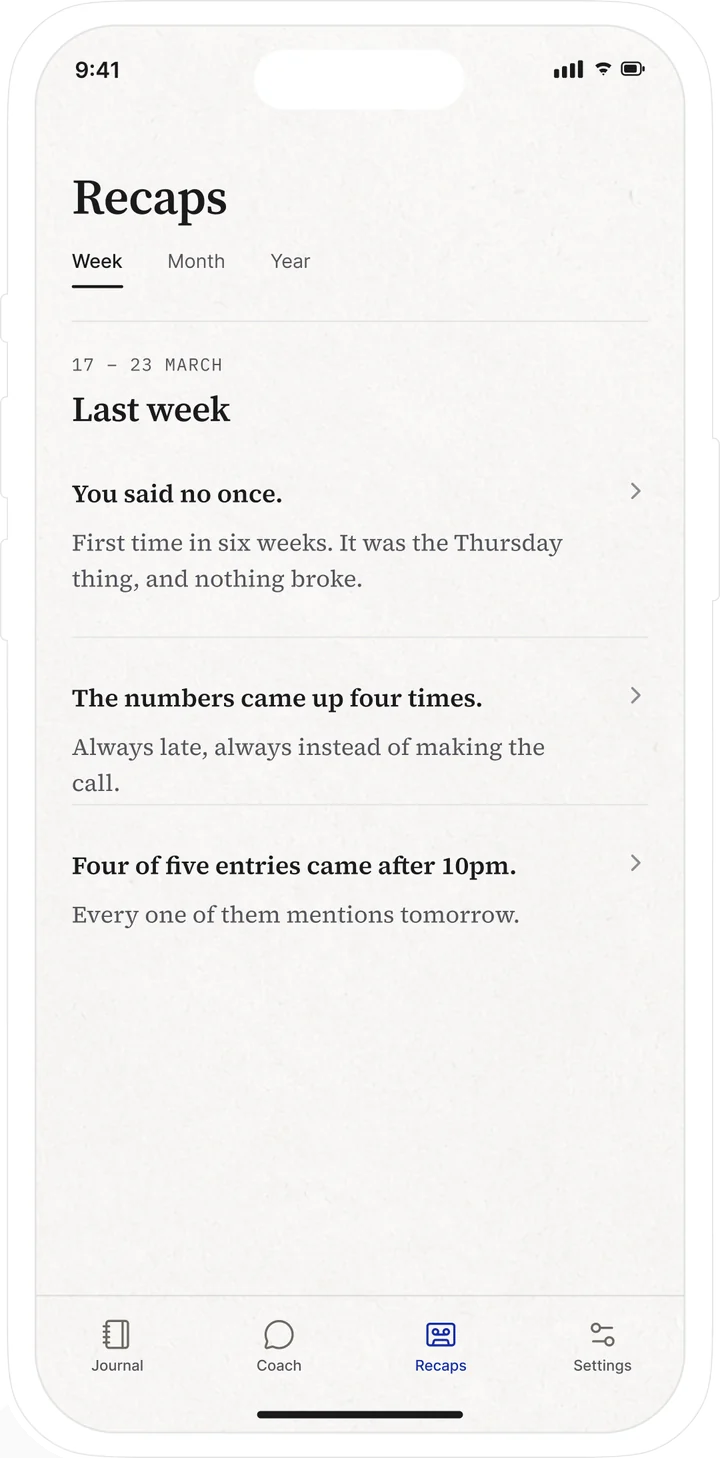
Pausa is the journal that pushes back so you can move forward. When they go quiet and you're about to double text, you tell Pausa what happened instead, by text, voice or WhatsApp. It asks what you're really afraid of, remembers what you wrote the last three times they went quiet, and shows you when you're explaining away the same thing again. When you're ready for the conversation, it helps you get clear on what you want to ask for. Pausa stays out of who's right and shows you your part of the pattern. See how it works.
Frequently asked questions
What does situationship mean?
A situationship is a romantic or sexual connection without an agreed label or commitment. Both people act like more than friends, but neither has said what it is.
Is a situationship a relationship?
Not yet. It becomes one when both people agree on what they are and what they want.
How long do situationships last?
There's no fixed length. They last as long as both people avoid the conversation, which is why some go on for years.
How do I end a situationship without drama?
Say it once, with the facts and what you need, and don't leave the door half open. A short, clear message is kinder than slowly disappearing.
Why do I keep ending up in situationships?
Often because the in-between feels safer than a clear answer. Look at what you accept and what you avoid asking for, and write down how each one started and ended; the same moment usually repeats.
Next time you're about to text them after days of silence, text Pausa instead.
- iPhone
- iPad
- Mac


