
The Social Media Trap: How Algorithms Hijack Your Curiosity
Nov 24, 2025
Explore how social media algorithms manipulate your attention, fueling addiction and impacting mental health, with actionable steps to regain control.

Social media platforms are designed to keep you scrolling, clicking, and consuming content far longer than you planned. They use advanced algorithms that exploit psychological triggers like unpredictability, curiosity, and emotional reactions to hold your attention. Here's how they do it:
Random Rewards: Dopamine spikes from unpredictable likes, comments, or updates mimic gambling behaviors, making you crave more interaction.
Curiosity Gaps: Clickbait titles and suspenseful previews leave you wanting answers, driving endless engagement.
Echo Chambers: Algorithms reinforce your beliefs by showing content aligned with your views, intensifying biases and limiting exposure to diverse perspectives.
Infinite Scroll and Auto-Play: These features remove natural stopping points, trapping you in a cycle of passive consumption.
Emotionally Charged Content: Outrage and extreme viewpoints dominate feeds, increasing stress and distorting reality.
This constant engagement comes at a cost: reduced focus, increased anxiety, and growing social divides. To regain control, set boundaries for your social media use, seek diverse information sources, and monitor your habits with tools like Pausa. By being intentional, you can break free from algorithmic control and reclaim your attention.
How Social Media is designed to ADDICT you
How Algorithms Manipulate Your Brain
Social media algorithms are designed to tap into your brain's reward system, keeping you hooked and coming back for more. These systems are crafted to encourage repeated interaction, making it crucial to understand their tactics if you want to take control of their influence.
Random Rewards and Dopamine Addiction
Your brain doesn’t just release dopamine when you get a reward - it also releases it in anticipation of one. Social media platforms take full advantage of this by introducing unpredictability into your feed. Every time you refresh, you might see a flood of likes, comments, or exciting updates - or you might see nothing at all. This randomness mimics the same psychological patterns seen in gambling, where intermittent rewards keep you chasing the next hit. The platforms even analyze when you're most likely to engage and use that information to nudge you toward further interaction.
But it’s not just about the randomness. These platforms also play on your need to resolve unanswered questions.
Information Gaps That Keep You Hooked
Humans are wired to resolve uncertainty, and social media exploits this instinct with precision. Platforms offer just enough information to spark your curiosity but not enough to fully satisfy it. Think of clickbait titles or video previews that stop at the most suspenseful moment - they’re all designed to create what's known as a "curiosity gap." This gap compels you to click, scroll, or watch longer. Sometimes, platforms reveal content bit by bit, a tactic called progressive disclosure, to keep you engaged for as long as possible.
Echo Chambers That Reinforce Your Views
Algorithms don’t just stop at exploiting your curiosity and reward systems - they also shape the content you see to reinforce your existing beliefs. By prioritizing posts, videos, and articles that align with your past interactions, these systems create a highly personalized feed. The content is often emotionally charged, intensifying confirmation bias and further entrenching your views. Over time, this selective exposure creates a feedback loop where your beliefs feel validated, while opposing perspectives seem increasingly extreme. The result? A world filtered through the lens of engagement-driven content, not a balanced or nuanced view of reality.
How Social Media Platforms Trap Your Attention
Social media platforms aren’t just casual tools; they’re carefully engineered to keep you hooked. By leveraging psychological insights and behavioral patterns, these platforms systematically draw you in and keep you engaged.
Infinite Scroll and Auto-Play Videos
One of the sneakiest tricks in their playbook is removing natural stopping points. Think about it - traditional media had built-in breaks, like the end of a chapter or a commercial break. Social media, on the other hand, keeps refreshing your feed endlessly. Add auto-playing videos to the mix, and suddenly, you’re caught in a loop of passive consumption that’s hard to break out of [2].
Paul Hoffman, Director of Yale Mental Health and Counseling, highlights the risks of this design:
"People can often feel compelled or engaged with content that can be detrimental to their mental health, especially if they are going through a period of increased anxiety or depression. It can be very important that people be mindful about the content they are consuming because often the very goal of the algorithms is to keep you mindlessly engaged." [1]
Personalized Content That Knows Your Weaknesses
Taking things a step further, personalized feeds are designed to dig into your habits and hold your attention even longer. Algorithms analyze your every move - how long you linger on a post, what you like, share, or comment on - and use that data to serve up content tailored to keep you scrolling.
Neta Alexander, Assistant Professor at Yale, explains:
"Alexander explained that algorithmic recommendation systems are strategically designed to exploit cognitive vulnerabilities to maximize screen time." [1]
While this customization might seem convenient, it often prioritizes keeping you glued to the screen over delivering content that’s actually good for your mental health.
Outrage Content That Sparks Strong Reactions
Another way platforms keep you engaged is by amplifying emotionally charged content. Algorithms quickly learn which posts provoke strong reactions - especially anger or outrage - and then flood your feed with similar content. This tactic, often referred to as an "engagement trap", thrives on our natural tendency to focus on emotionally charged material [3].
By amplifying extreme or provocative viewpoints, these algorithms can distort reality, making fringe perspectives seem more common than they actually are. Over time, exposure to such content can mess with your emotional balance, increasing stress and reactivity [4]. In fact, studies reveal that moral outrage is significantly more common online than in face-to-face interactions [5].
With an estimated 210 million people worldwide struggling with social media addiction [1], these attention-grabbing strategies have become a growing public health concern.
The Real Cost of Algorithm Addiction
Social Division and Spread of False Information
Social media algorithms play a powerful role in shaping the content you encounter, often reinforcing your existing preferences and political leanings [6]. By consistently presenting information that aligns with your beliefs while filtering out opposing viewpoints, these algorithms create a bubble around you [6][7]. This phenomenon intensifies biases, leaving users stuck in echo chambers where their perspectives become more rigid and one-sided [6][7]. As a result, people not only grow further apart in their views but also become more susceptible to misinformation, deepening social divides and distorting the way we perceive reality.
How to Break Free from Algorithm Control
Once you understand how algorithms capture your attention, the next step is taking control back. It’s not about completely avoiding technology but about being intentional with how you use it. By setting limits, seeking out varied perspectives, and using tools like Pausa, you can push back against the grip of algorithmic influence.
Set Boundaries for Social Media Use
Start by defining clear rules for when and how you use social media. For instance:
Schedule specific times to check your accounts instead of scrolling endlessly.
Use your phone’s screen time features or app timers to limit usage.
Turn off non-essential notifications to reduce distractions.
Create phone-free zones, such as during meals or in the hour before bedtime.
These small changes can help you regain focus and reduce the constant pull of notifications.
Get Information from Multiple Sources
Algorithms often create echo chambers, showing you content that aligns with your existing views. To break free, actively seek out diverse perspectives.
"As users, it is crucial to recognize these dynamics and actively seek out a variety of perspectives to gain a more comprehensive understanding of our surroundings", explains Asma Mir [6].
Explore newsletters, podcasts, or publications that challenge your usual viewpoints. Dr. Jessica Koehler, Ph.D., from the University of Arizona Global Campus Psychology Department, emphasizes the importance of awareness:
"To mitigate the negative effects of social media, several strategies can be employed to foster a healthier digital environment. First, promoting digital literacy is crucial. Users, especially younger people, should be educated about how social media algorithms manipulate content to keep them engaged. This awareness can encourage critical thinking and more mindful consumption of digital content." [7]
By broadening your information sources, you can step outside algorithm-driven bubbles and gain a richer understanding of the world.
Use Pausa to Track and Reflect on Digital Habits
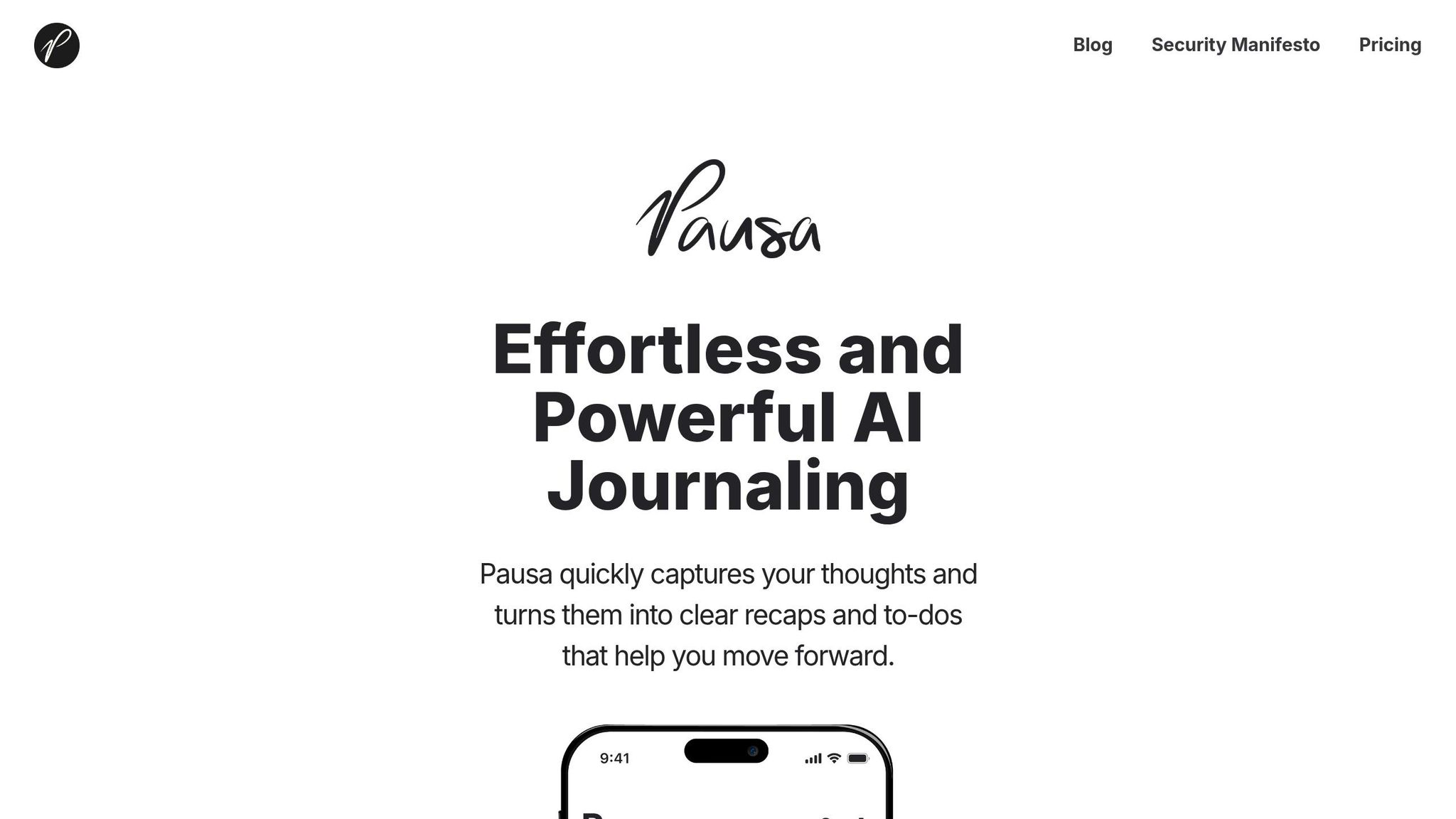
Self-awareness is key to resisting algorithmic manipulation, and that’s where Pausa comes in. This app helps you monitor your digital habits and reflect on how social media impacts your mood and productivity.
With Pausa’s 20-second journaling feature, you can quickly note how you feel after using social media - whether it leaves you anxious, distracted, or energized. Over time, these entries reveal patterns in your digital behavior.
The app’s AI-powered daily recaps organize your thoughts into clear summaries, helping you identify recurring themes. You can also set goals for healthier engagement and replace mindless scrolling with meaningful activities, like calling a friend, going for a walk, or working on a hobby. Weekly and monthly recaps provide insights into your long-term habits, showing how small changes can boost your productivity and well-being.
Taking these steps helps you reclaim control over your digital and mental space, moving towards a healthier balance.
Conclusion: Reclaim Control Over Your Attention
Social media algorithms are designed to tap into your curiosity, using tactics like random rewards, information gaps, and emotional triggers to keep you hooked. They adapt to your habits, exploit your vulnerabilities, and create echo chambers, all while manipulating your brain's dopamine system to drive endless engagement.
The effects are hard to ignore. Constant exposure to these strategies can shorten your attention span, increase feelings of anxiety, and leave you mentally drained. They disrupt your ability to focus deeply, whether on work or meaningful conversations. Beyond personal impacts, these algorithms contribute to the spread of misinformation and deepen social divisions, prioritizing clicks and views over truth. These challenges demand action.
But recognizing these effects gives you the power to push back. By setting clear boundaries around your digital habits and seeking information from varied sources, you can regain control. The goal is to use technology with intention, rather than letting it dictate your behavior.
Self-awareness is your best defense. Tools like Pausa can help you spot patterns in your digital habits, offering insights that guide you back to what truly matters. Its AI-generated recaps shed light on how algorithms may be steering you off course, empowering you to align your tech use with your values and goals.
FAQs
How do social media algorithms keep you hooked?
Social media algorithms are crafted to grab and hold your attention by playing on psychological triggers. They rely on strategies like social proof - showing you what others are engaging with - along with FOMO (Fear of Missing Out) and emotionally charged content that sparks joy, anger, or surprise. These elements tap into basic human curiosity, making it tough to pull yourself away.
By analyzing your behavior, these algorithms curate a personalized feed filled with content that feels like it’s made just for you. This creates an endless cycle of scrolling, designed to keep you engaged for as long as possible, often at the cost of your focus and mental clarity.
What are some practical ways to reduce social media’s impact on mental health?
To help protect your mental health from the downsides of social media, consider a few simple but effective strategies. Start by setting daily time limits for how long you spend on apps, and unfollow accounts that leave you feeling anxious or overwhelmed. Turning off non-essential notifications can also cut down on distractions and give you more peace of mind.
Another helpful approach is taking intentional breaks - this could mean temporarily deleting apps or carving out screen-free time to enjoy offline activities. Lastly, focus on using social media in a way that benefits you. Engage with content that motivates, educates, or uplifts you, so you stay in control and prioritize your well-being.
How can I tell if I'm stuck in an echo chamber, and how do I broaden my perspective?
If you want to figure out whether you're stuck in an echo chamber, start by noticing the type of content you’re consuming. Does it mostly align with your current beliefs and trigger strong emotional responses? If so, it’s likely that algorithms are tailoring what you see to keep you engaged.
To break out of this cycle, consider following a mix of voices and opinions, even those that challenge your perspective. Another way to expand your understanding is by turning to trusted sources outside of social media - think respected news outlets, insightful books, or thought-provoking podcasts. Stepping away from platforms driven by algorithms can also give you the space to explore new ideas and reconnect with your natural curiosity.