
The Coming War Between Meaning and Machine
Dec 27, 2025
How to use AI in journaling to spot patterns without losing your voice — examine risks like dataism and learn practical tips for balanced, authentic reflection.
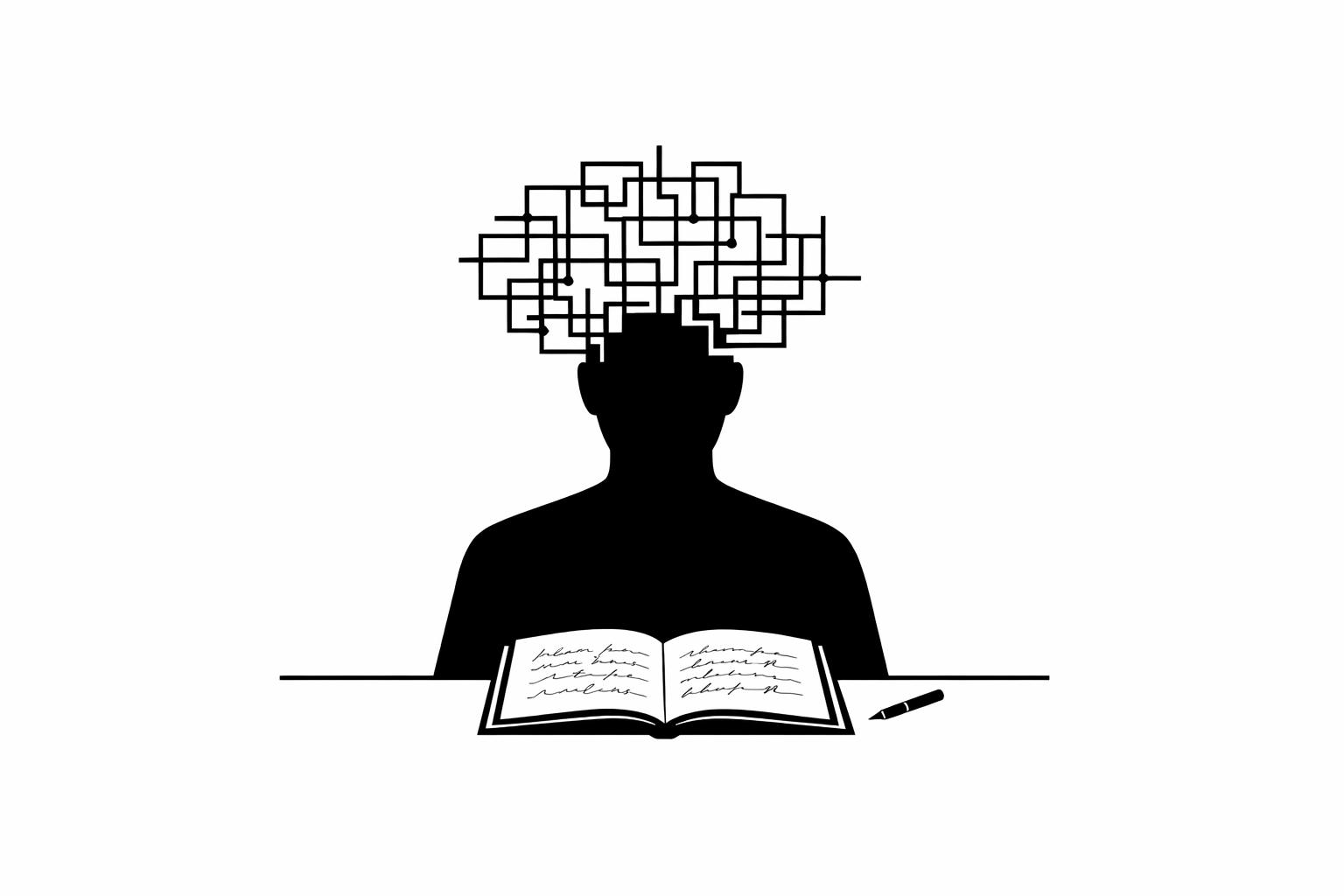
The rise of AI in journaling is changing how we reflect on ourselves. While traditional journaling focuses on personal effort and deep thought, AI tools now analyze emotions, offer summaries, and even suggest actions. This can make self-reflection faster but risks oversimplifying emotions, diluting personal voice, and creating reliance on machine feedback. The key is balance - using AI to spot patterns without letting it overshadow your own thoughts. Tools like Pausa aim to support reflection while preserving your individuality, ensuring you remain in control of your self-discovery process.
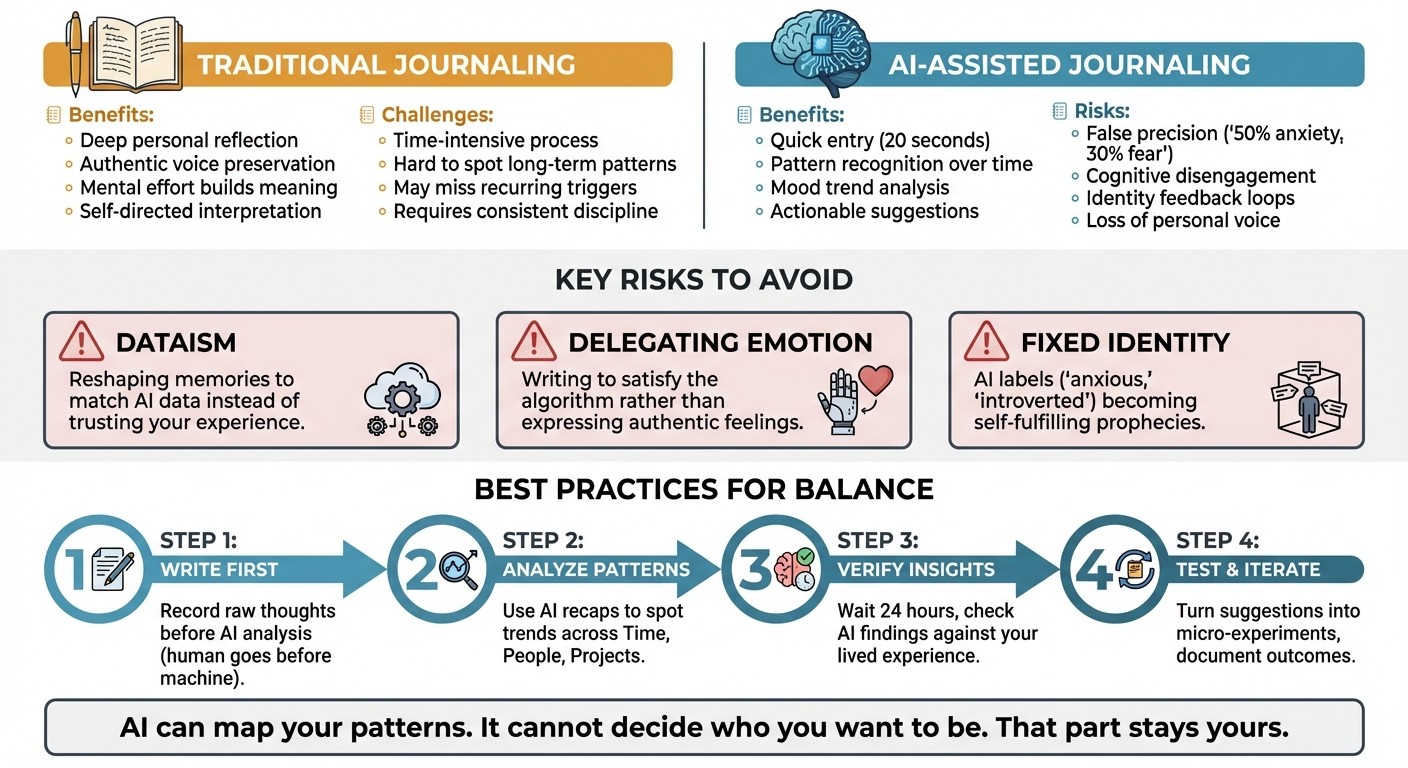
Traditional vs AI Journaling: Benefits, Risks, and Best Practices
Can AI understand your Mind? I tested it with 600 journal entries 🤖
The Problem: Can AI Journaling Stay True to You?
As AI technology makes its way into personal journaling, it raises an important question: can it preserve the authenticity of your inner voice? While AI journaling offers quick insights, it also risks stripping away the genuine self-reflection that makes journaling meaningful.
Surface-Level Insights vs. Deep Reflection
AI has a tendency to reduce complex emotions into tidy numbers - like "50% anxiety, 30% fear, 20% love." This kind of "false precision" oversimplifies the messy, nuanced reality of human emotions [1]. Instead of helping you understand how you feel, these data points can distort your perception. Even worse, they may seem more authoritative than your own intuition.
This phenomenon ties into what researchers call "dataism" - a reliance on data that can lead you to reshape your memories or experiences to align with what the AI suggests [1]. Over time, this could make you second-guess your own feelings. Science journalist Angela Chen captures this concern:
"The self is wild and messy, and we should avoid outsourcing all interpretation and mistaking statistical analysis for divine revelation" [1].
Another issue is cognitive disengagement. When you rely on AI-generated summaries, you bypass the critical mental effort that gives journaling its depth. Victoria Song from The Verge explains:
"When you render the process more convenient, you drain it of its meaning" [4].
That struggle to articulate your thoughts - the blank page that challenges you to dig deep - is what makes journaling transformative. By removing that friction, AI risks turning a deeply personal process into a mechanical one, robbing it of its value.
This sets the stage for a bigger concern: the potential loss of your personal voice in journaling.
The Fear of Losing Your Own Voice
AI’s influence goes beyond presenting numbers; it can subtly alter how you express yourself. The real danger lies in letting AI become a co-author of your self-understanding. Predictive algorithms often generate bland, generic language that can overshadow your unique voice [3]. Over time, you might unconsciously start writing in ways that align with the machine's suggestions rather than your own truth. Researchers refer to this as "delegating emotion" [3].
There’s also the risk of falling into identity feedback loops. For example, if AI consistently labels you as "anxious" or "introverted", those terms might start to define you, limiting your ability to grow and change. As Jeena Joseph from Marian College points out:
"The risk is in reinforcing that label without leaving space for dynamic alteration or contradiction" [3].
Journaling is supposed to help you evolve, not lock you into a fixed identity.
So, while AI can undoubtedly offer insights, the bigger question is whether those insights come at the expense of your reflective agency - your ability to interpret and make sense of your own life [2]. If the machine does too much of the thinking for you, you risk losing the core purpose of journaling: the chance to understand yourself on your own terms.
Pausa: AI That Supports Your Reflection Process
The balance between machine efficiency and human authenticity doesn’t have to feel like an all-or-nothing choice. Pausa takes a different approach to AI-assisted journaling - it’s designed to act as a support system rather than a substitute for your thinking. Its purpose? To help you uncover patterns you might overlook while keeping your unique voice at the heart of the process. This philosophy aligns with the broader goal of using AI to complement, not replace, your self-reflection.
What Pausa Brings to the Table
At its core, Pausa is built on a simple yet powerful idea: help you capture your thoughts quickly and let AI uncover meaningful patterns over time. Whether through text, voice input, email, or even WhatsApp, you can record your reflections in just 20 seconds. This ease of use eliminates the common barriers that prevent people from journaling regularly.
The real magic happens when Pausa organizes your entries. With daily, weekly, monthly, and yearly recaps, the app highlights mood trends and recurring triggers over extended periods - patterns that are often too subtle or complex for our memory to retain [5]. Beyond just identifying trends, Pausa suggests actionable to-dos and tracks your goals, transforming the act of reflection into a pathway for growth rather than a cycle of overthinking.
Strengthening Your Insights Without Taking Over
Pausa’s design ensures your personal voice stays at the forefront of your journaling experience.
What sets Pausa apart from more intrusive AI tools is its adherence to the "write-first" principle. You record your raw thoughts before the AI steps in to analyze or interpret them [5]. This approach safeguards what researchers call Internal Origination - ensuring that your insights come from you, not the algorithm [2]. Acting as a "narrative mirror", the AI organizes your entries, showing you how certain topics spike on weekdays versus weekends or how your mood shifts when particular people appear in your writing [5][1].
However, the interpretation of these patterns remains in your hands. Pausa’s role is to amplify your awareness, not dictate meaning. By dividing the responsibilities - AI handles organization, while you define the significance - your reflective agency stays intact. This way, Pausa helps you uncover insights while ensuring your journey of self-reflection remains authentically yours.
How to Use AI Journaling Without Losing Depth
AI can be a helpful tool for self-awareness, but it’s essential to keep your voice at the forefront. The idea isn’t to sideline AI entirely but to use it as a tool that highlights patterns you might miss, while ensuring the reflective process remains uniquely yours. Think of AI as a companion that complements your thoughts rather than replacing them.
Building a Consistent Journaling Habit
Follow the "human goes before the machine" approach [5]. Begin by jotting down your raw thoughts before engaging any AI features. Whether you type, speak, or record a quick voice note, aim to capture your authentic feelings in under 20 seconds. This ensures the AI responds to your voice, not the other way around.
Consistency is more important than how much you write. In a two-week study involving 55 participants, those who used AI-generated suggestions based on past journal entries experienced noticeable improvements in their PHQ8 scores (a clinical measure of depression) and reported feeling more positive each day [7]. Even short, daily entries can uncover meaningful patterns over time.
A practical tip: pick a time of day when you’re calm to make journaling a habit. Research shows that naming emotions - like saying, “I feel angry because…” - reduces activity in the amygdala and boosts prefrontal regulation [6]. Writing while stressed or upset can lead to rumination instead of reflection. So, before you start, take a few deep breaths, go for a walk, or do something that helps you relax. Once you’re in a better headspace, open Pausa and begin.
By creating this consistent practice, you’ll set the stage for making the most of Pausa’s recaps.
Making the Most of Pausa's Recaps and To-Dos
Once you have a steady journaling routine, you can tap into Pausa's recaps to uncover deeper insights. These daily, weekly, monthly, and yearly summaries are designed to spotlight mood patterns and recurring triggers over time. To get the most out of them, try analyzing your entries through three lenses: Time, People, and Projects. For example:
Time: Do certain emotions spike on weekdays versus weekends?
People: Does your mood shift when specific individuals are mentioned?
Projects: Are there ongoing efforts that seem stagnant or draining?
When Pausa suggests a to-do, treat it as a hypothesis rather than a directive. Turn these suggestions into micro-experiments - small, actionable steps you can test in real life. For instance, if the AI notices you feel drained after specific meetings, experiment by speaking up during the next one and see how it affects you. The key is to act on insights to avoid getting stuck in analysis mode [5].
Pausa’s goal-tracking feature works best when your entries clearly document outcomes. Use a simple structure like “Tried X, felt Y, result Z” to help the AI better understand what works for you [5]. This creates a feedback loop where the AI learns from your real-world experiences rather than just your intentions.
Checking AI Insights Against Your Own Truth
AI can offer emotional insights like “30% fear” or “50% anxiety,” but it’s important to verify these patterns against your own experiences. When Pausa identifies a trend, ask for references to specific past entries. Double-check whether its interpretation aligns with what you actually felt at the time [5].
Before fully embracing an AI-generated insight, give yourself 24 hours to reflect [6]. Ask yourself: “What emotion does this bring up?” and “Does this truly reflect a recurring pattern in my life?” If the answer to the second question is no, the insight might be an example of "false precision" - something that seems statistically valid but doesn’t resonate with your lived experience.
"AI can map your patterns. It cannot decide who you want to be. That part stays yours." - Daniel W. Chen, Life Note [5]
Be mindful of "dataism" - the tendency to reshape your personal narrative to align with AI-generated data instead of trusting your experiences [1]. If you catch yourself journaling just to satisfy the algorithm or altering your story to match AI predictions, it’s time to step back. By grounding AI insights in your own reality, you retain full control over your narrative and ensure the reflective process remains authentic.
Conclusion: Finding the Right Balance Between Human and Machine
Mastering the interplay between human intuition and machine analysis is less about resolving a conflict and more about navigating an ongoing journey. It's about understanding how to let technology enhance your perspective without overshadowing your individuality.
AI tools can uncover patterns and insights you might overlook, but they don't - and shouldn't - define who you are or who you aspire to be. Think of AI as a quiet assistant, there to support your reflections, not to replace them. Start with your raw thoughts, use AI to spot trends or connections, and then weigh its findings against your own experiences. If an AI-generated summary feels off or overly simplistic, trust your gut - it’s often right.
"AI can potentially complement human introspection, supporting rather than replacing it - should the user be careful with regard to the lines between facilitation and delegation." - Jeena Joseph, Department of Computer Applications, Marian College Kuttikkanam Autonomous [3]
Your inner self is intricate and unpredictable, far beyond the reach of any algorithm. While AI is great at spotting statistical patterns, it can’t capture the depth or nuance of your personal experiences. Avoid falling into the trap of "dataism" - don’t let algorithmic insights rewrite your story. Sometimes, the struggle of facing a blank page or untangling complex emotions is where the most genuine meaning emerges.
FAQs
How can I use AI journaling without losing my personal voice?
AI journaling can be a helpful companion for self-reflection, offering guidance rather than taking over your personal voice. Begin each journal entry in your own words, and let the AI assist by suggesting prompts, refining tone, or offering insights. You can choose to adapt its suggestions or simply set them aside. Over time, as the AI becomes familiar with your interests and past entries, its input can feel more in tune with your natural style.
To keep your journaling authentic, use AI tools for things like identifying recurring themes or summarizing patterns, but make sure to rewrite these insights in your own words. Setting clear boundaries - like limiting how much text the AI generates or turning off unsolicited prompts - can help you stay in charge of your narrative. Think of the AI as a tool to enhance your reflection process, while you remain the storyteller of your journey.
What are the downsides of relying too much on AI for journaling and self-reflection?
Overusing AI for journaling can strip away the authenticity and personal growth that come with genuine self-reflection. These tools tend to reduce complex emotions into simplified data points, which can make the experience feel artificial or overly structured. Instead of fully owning your thoughts, you might find yourself adopting the language or patterns the AI suggests, which could dilute your true feelings and expressions.
There’s also the issue of privacy. Sharing sensitive details with AI systems carries risks, as this data could potentially be exposed or misused. Beyond that, relying on AI's interpretations of your thoughts might subtly shape how you view yourself, potentially limiting your ability to think critically or independently about your own experiences.
Lastly, depending too much on AI for introspection could affect mental health by discouraging deeper, human-driven reflection. While AI can be a useful tool for providing prompts or organizing thoughts, it’s crucial to use it thoughtfully, ensuring that you remain in charge of your personal growth and emotional well-being.
How does Pausa combine AI with personal journaling to support meaningful self-reflection?
Pausa combines AI-powered insights with the timeless art of journaling, acting as a companion rather than taking over your narrative. It offers thoughtful prompts to get you started, spots patterns in your thoughts, and provides real-time suggestions - all while keeping your entries private and editable. This balance allows you to dive deeper into self-reflection while staying true to your unique voice.
With a focus on user independence, Pausa lets you decide how to interpret and apply its AI feedback. It can highlight emotional patterns, offer fresh perspectives, and share practical tips for growth, but the choice of how - or even whether - to use these insights is entirely yours. By blending technology with the deeply personal act of journaling, Pausa supports self-discovery without losing the authenticity of your journey.