
The Algorithm Doesn’t Want You to Think - Just to Scroll
Dec 14, 2025
Algorithms use infinite scroll and dopamine-driven feeds to hijack attention, fragment thinking, and harm mental health. Practical steps to regain focus.
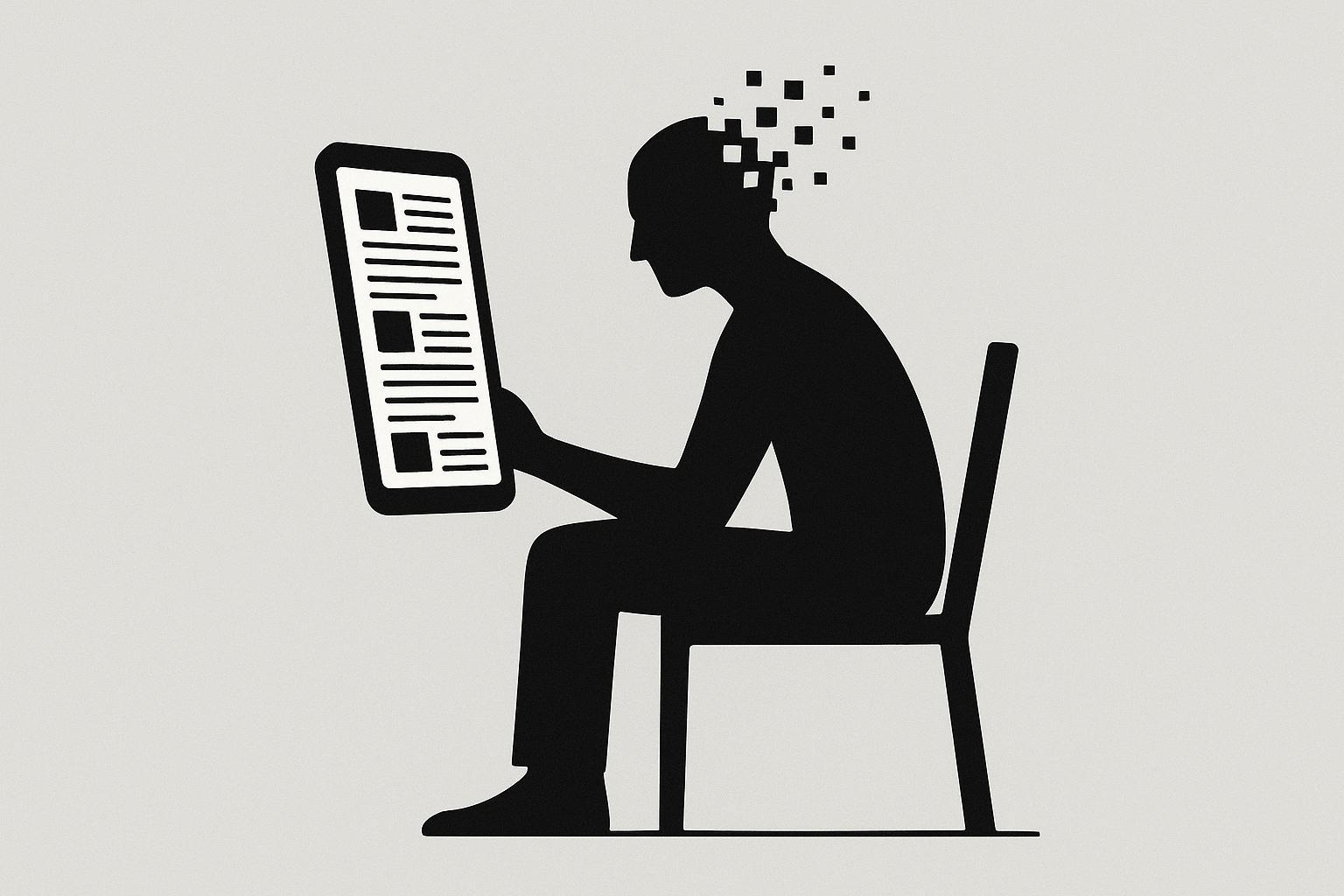
Algorithms are designed to keep you scrolling, not thinking. They exploit your brain’s natural craving for novelty and dopamine, using tricks like infinite scroll and unpredictable rewards to keep you hooked. This leads to fragmented attention, emotional burnout, and weakened critical thinking. Over time, these habits can harm your mental health, decision-making, and personal growth.
Here’s what you need to know:
Infinite Scroll: Removes stopping points, trapping you in endless content consumption.
Dopamine Loops: Notifications and personalized feeds trigger addictive behaviors similar to substance use.
Mental Costs: Time distortion, emotional exhaustion, and reduced focus are common consequences.
Critical Thinking Decline: Algorithms narrow your perspective, making independent thought harder.
To regain control, start with small changes:
Practice mindfulness by questioning your purpose before opening apps.
Adjust your digital environment - turn off notifications and use non-personalized feeds.
Use tools like Pausa to track habits, set boundaries, and align screen time with your goals.
The solution isn’t abandoning technology but using it intentionally. Short, consistent steps can help you reclaim focus and protect your mental clarity.
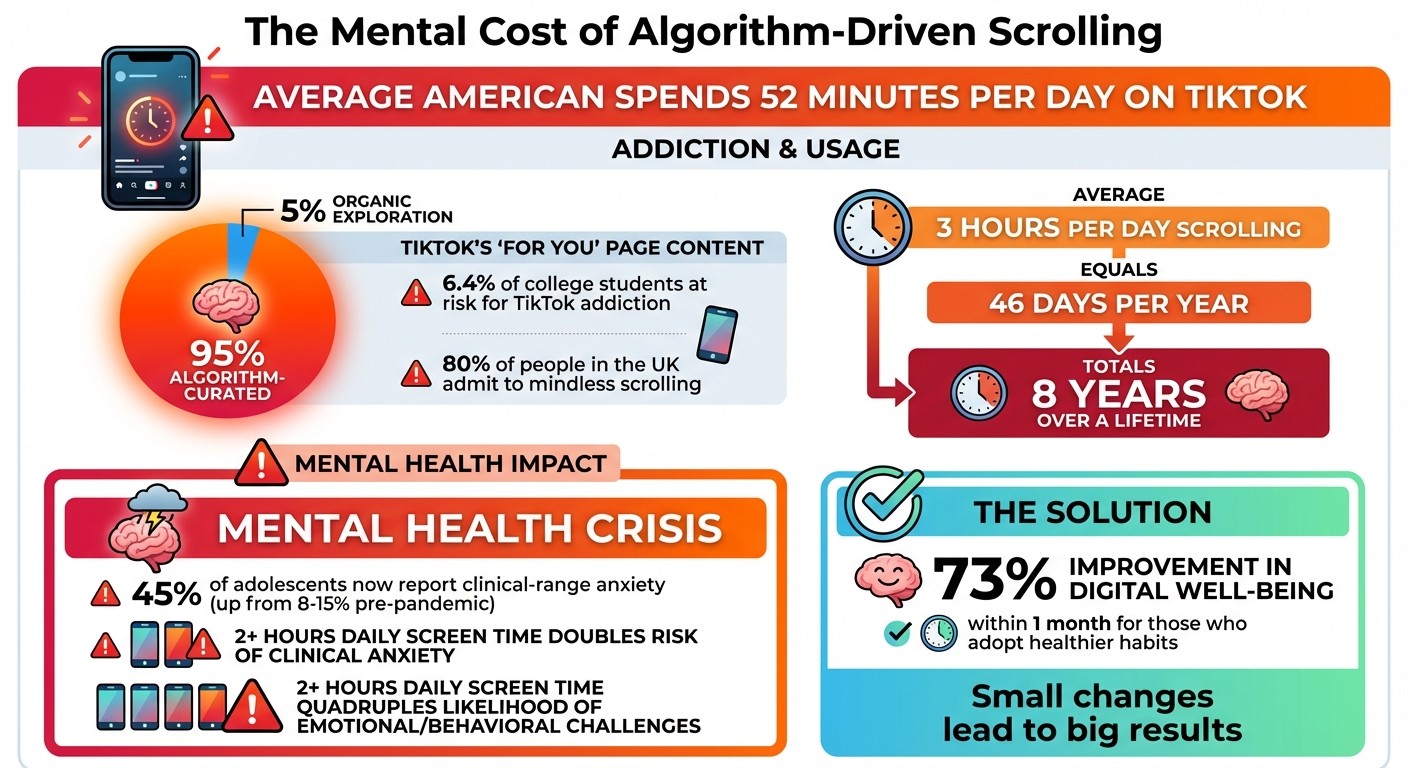
The Mental Cost of Algorithm-Driven Scrolling: Key Statistics and Impact
How Algorithms Keep You Scrolling
Infinite Scroll and Unpredictable Rewards
Ever wonder why it’s so hard to put your phone down? Digital platforms use a psychological trick called a variable-ratio reinforcement schedule - the same mechanism that makes slot machines so addictive. You never know when the next exciting post, hilarious video, or gratifying like will pop up. It’s this unpredictability that hooks your brain, keeping you scrolling in a constant state of anticipation [1][2].
Infinite scroll adds to the problem by eliminating natural stopping points. Instead of reaching the end of a page, you’re met with an endless stream of content, making it incredibly hard to disengage [1][3]. Combine this with the dopamine hits you get from finding something entertaining or engaging, and it’s no surprise that the average American spends about 52 minutes a day on TikTok. In fact, 95% of the content on TikTok's "For You" page is curated by algorithms specifically designed to keep you scrolling [7].
Dopamine-Driven Content Personalization
Every action you take online - whether it’s a click, pause, share, or scroll - teaches the algorithm more about what grabs your attention. The algorithm then adjusts, delivering more of the content that keeps you hooked. This creates a feedback loop where your brain’s reward system is constantly activated [4][7]. Over time, this cycle can lead to dopamine desensitization, meaning you’ll need more intense or frequent digital interactions to feel the same level of satisfaction. Notifications, likes, and comments become irresistible triggers, pulling you back in [6].
The effects are eerily similar to substance addiction. Studies show that heavy social media users experience reduced activity in the dorsolateral prefrontal cortex - a pattern also observed in addiction disorders [7]. In fact, the dopamine release triggered by social media use has been compared to the effects of drugs like heroin or meth [5]. As Debasmita De and colleagues explain:
AI-driven social media algorithms are designed solely to capture our attention for profit without prioritizing ethical concerns, personalizing content, and enhancing user engagement by continuously tailoring feeds to individual preferences [4].
These algorithms exploit your brain’s natural craving for novelty, constantly presenting you with "fresh" content. While this keeps you engaged, it also makes it harder to focus on deeper, more meaningful activities [7].
No Natural Stopping Points
Platforms are designed to keep you scrolling, removing any cues that might encourage you to take a break. Unlike a book with chapter breaks or a TV show with episodes, there are no natural pauses. This is no accident - longer usage translates directly to higher ad revenue. The more time you spend scrolling, the more ads you’re exposed to.
This design makes it incredibly difficult to stop. Without clear stopping points, you may find yourself stuck in an endless loop of scrolling, often longer than you intended. This lack of control is particularly concerning, with studies showing that 6.4% of college students are at risk for TikTok addiction [7]. By equating prolonged usage with "engagement", platforms prioritize screen time over the quality of your interaction, leaving users in a cycle of compulsive behavior.
The Mental Cost of Passive Scrolling
Time Distortion and Fragmented Attention
Have you ever glanced at a notification, only to find yourself lost in an endless scroll an hour later? That’s the subtle yet powerful effect of passive scrolling - it warps your sense of time and scatters your focus [16][8]. Platforms are designed to keep you hooked, with emotionally stimulating content triggering dopamine-driven novelty-seeking loops [16][8]. Over time, these habits chip away at your ability to focus on tasks that demand sustained mental effort.
But the damage isn’t just temporary. Studies have shown that heavy use of digital media is linked to reduced gray matter in the prefrontal cortex, the part of your brain that governs decision-making, impulse control, and attention [8]. On top of that, constant digital stimulation overwhelms the anterior cingulate cortex, making it harder to filter out distractions and focus on what truly matters [8].
The numbers are startling. A survey found that 80% of people in the UK admit to mindless scrolling, averaging three hours a day. Over a year, that adds up to 46 entire days, and over a lifetime, it can total eight years [9]. This constant disruption drains not just your time but also your emotional and mental energy.
Emotional Exhaustion and Mood Swings
The exhaustion you feel after scrolling isn’t just in your imagination. Spending hours immersed in algorithm-driven content can leave you emotionally depleted and disconnected [11]. These platforms are engineered to override natural fatigue, trapping you in a cycle of emotional burnout [11][14][15]. Dr. Sahib Khalsa explains the toll this takes:
We are increasingly being bombarded by sensory signals in our environment…whether it's what we're looking at on the internet, whether it's our social media, whether it's simply the number of times we check email, all of which can overstimulate our nervous system and make it harder to notice how we're feeling.
The impact on mental health is profound. Nearly 45% of adolescents now report anxiety levels in the clinical range, a sharp increase from the 8–15% seen before the pandemic [12][13]. Studies also show that spending more than two hours a day on screens during weekdays doubles the risk of clinical anxiety and quadruples the likelihood of emotional and behavioral challenges [12][13]. This "zombie-like" state of endless scrolling not only drains emotional energy but also isolates people, weakening real-world connections and fueling loneliness [11][2].
Weakened Critical Thinking
Perhaps the most concerning consequence of passive scrolling is its impact on independent thought. When algorithms dictate the content you consume, they essentially take over your mental workload, encouraging intellectual stagnation [8]. This constant digital bombardment reduces hippocampal activity, disrupts working memory, and leads to frequent attention lapses [8][10].
Researchers describe this state as "brain rot", where chronic overstimulation leaves you feeling foggy, unmotivated, and prone to forgetfulness [8]. As Ariarajah points out:
more of the same may be just putting us completely out of reach to a wide range of possibilities [8].
This narrowing of perspective makes it harder to think critically, absorb new information, or make decisions without relying on algorithms. It’s a stark reminder of the importance of mindful digital habits to protect your cognitive and emotional well-being.
Why You Can’t Stop Scrolling (End-Stage Screen Addiction)
Practical Strategies for Intentional Digital Habits
Take back control of your attention by adopting deliberate digital habits that help you stay focused and intentional.
Mindfulness Techniques for Digital Use
Using technology mindfully means ensuring it aligns with your goals instead of distracting you. This approach focuses on awareness, intentional use, and self-compassion [17][18].
Before opening an app, pause and ask yourself, "What am I looking for right now?" This small question can interrupt the automatic loop that keeps you endlessly scrolling. When you do engage with digital content, try to stay fully present - avoid letting your mind drift while your fingers keep scrolling. Pay attention to moments when you instinctively grab your phone out of boredom or anxiety instead of addressing a real need. These brief moments of awareness can create space between your impulses and actions, giving you more control over your attention.
Once you've started practicing mindfulness, the next step is to reshape your digital environment to support healthier habits.
Customize Your Digital Environment
Your online environment plays a major role in shaping your behavior, but you can take charge of how you interact with it. Start by diversifying your information sources and using tools like non-tracking search engines. On social media, opt for chronological or non-personalized feeds when possible, and unfollow accounts that don’t align with your personal goals. Reducing visual triggers, like turning off red notification badges, can also help minimize distractions.
Take your privacy seriously. Adjust your settings to disable personalized ads, location tracking, and other data collection features. Private browsing and clearing your history regularly are small but effective steps. Some people even use tactics to confuse algorithms, like deliberately interacting with unrelated content to obscure their preferences.
With a more intentional environment in place, you can explore tools to reinforce these boundaries.
Use Digital Detox Tools
You don’t have to ditch technology entirely to create healthier habits. Instead, use tools that encourage mindful engagement and help you set boundaries. A digital detox isn’t about avoiding devices altogether - it’s about making thoughtful changes that replace harmful habits with better ones over time.
Apps designed for digital detox can block distractions or limit screen time, introducing just enough friction to make you pause before diving into mindless scrolling. Set small boundaries, like only checking work email on your laptop, and try consuming content at a slower, more deliberate pace. For example, a study by the Happiness Research Institute found that participants who took a week-long break from Facebook reported feeling happier and more satisfied with their lives [19].
Start small. Try one new strategy for a week, see how it feels, and build from there. Treat your attention like the precious resource it is - it deserves care and protection.
Reclaim Your Focus with Pausa
Now that you know how algorithms can hijack your attention, it’s time to take charge. Say goodbye to endless scrolling with tools designed to bring intentionality back into your daily life. Enter Pausa - an AI-powered journaling app that helps you turn fleeting thoughts into meaningful insights, all while supporting your personal growth. Here's how Pausa can help you regain focus and control.
Quick and Effortless Journaling
Pausa makes it incredibly easy to capture your thoughts in under 20 seconds. Whether you prefer typing or using voice input, you can log your reflections instantly via your iPhone, email, or even WhatsApp. This means no more letting important observations slip by. For instance, if you notice a pattern in your scrolling habits, you can document it right away - creating a record of what triggers that automatic urge to grab your phone and what you’re truly seeking when you open an app.
Insights Through Daily Recaps
The app’s AI doesn’t just store your entries - it transforms them into daily, weekly, monthly, and annual summaries. These recaps reveal patterns in your digital behavior, such as reaching for your phone when work stress hits or scrolling during specific times of the day. By shining a light on these habits, Pausa encourages you to engage more thoughtfully with both your devices and your emotions. Over time, you’ll start to connect the dots between your screen time and your mental state.
Turning Awareness into Action
Awareness is just the first step - Pausa helps you take it further with its goal-tracking features. The app aligns your daily habits with your personal growth goals by offering actionable suggestions based on your journal entries. For example, if you’ve noted that late-night scrolling is affecting your sleep, Pausa might recommend creating a phone-free bedtime routine. It’s all about turning insights into meaningful, lasting changes.
Conclusion: Aligning Digital Habits with Personal Growth
Key Takeaways
Social media algorithms are designed to keep you hooked. By exploiting dopamine-driven feedback loops and our natural tendency to focus on negativity, these systems encourage endless scrolling. The downside? Mental fatigue, fragmented attention, higher stress levels, and even changes to how your brain functions over time. These effects can undermine your ability to think critically and maintain emotional balance.
But knowing this isn’t enough - you need to act. Setting boundaries, reshaping your digital environment, and intentionally disrupting mindless scrolling are key steps. The goal isn’t to ditch technology altogether, but to reshape how you use it. And here’s the good news: people who adopt healthier digital habits report a 73% improvement in their overall digital well-being within just one month [20]. That’s the kind of impact intentional choices can have.
Take Action with Mindful Tools
Understanding the toll of excessive screen time is only the beginning. Tools like Pausa can help you turn awareness into action. With features like quick journaling, AI-powered recaps, and goal tracking, you can gain clarity on how your digital habits affect your daily life. Start by observing your patterns - note when you instinctively grab your phone, what prompts it, and how you feel afterward. Pausa’s daily summaries can help you uncover trends you might not even realize are there.
Shifting from mindless scrolling to intentional engagement doesn’t happen overnight, but small, consistent steps can make a big difference. With the right support, you can reduce digital fatigue, regain your focus, and align your screen time with what truly matters to you. Protecting your attention starts with a simple decision: valuing your mental clarity more than the next swipe.
FAQs
How can I stop endlessly scrolling and use my time more intentionally?
Breaking free from the cycle of endless scrolling starts by setting clear limits. Take advantage of app timers or your phone's built-in features to cap your usage. Turning off non-essential notifications can also go a long way in cutting down distractions.
Be thoughtful about your digital space. Unfollow accounts that don't bring value or positivity to your life, and instead, follow content that aligns with your goals or sparks genuine interest. You might also want to schedule regular digital detox sessions - even a few hours away from your screens can help you reconnect with offline activities and regain your focus.
Lastly, bring mindfulness into your device use. Before diving into a scrolling session, pause and ask yourself: Am I doing this out of habit, or is there a purpose? These small but consistent changes can help you take back control of your time and attention.
How does endless scrolling affect mental health?
Endless scrolling, powered by algorithms that seem to know exactly how to keep us hooked, can seriously impact mental health. It’s linked to heightened anxiety, stress, and even feelings of depression. Over time, this habit can leave you feeling overwhelmed, drained, and disconnected from a sense of purpose.
Social media platforms are built to capture your attention for as long as possible, but this constant stream of content often leaves little room for meaningful, intentional activities. The good news? You can take steps to break free from this cycle. Practicing mindfulness, setting limits on your screen time, or curating your feed to focus on content that supports your personal goals can help you regain balance and reclaim your time.
How do algorithms take advantage of our brain's dopamine system?
Our brains are wired to respond to variable reward schedules, a tactic that algorithms cleverly exploit. It works much like gambling - those unpredictable rewards spark a dopamine rush, leaving us feeling a mix of excitement and anticipation. This cycle makes behaviors like endless scrolling hard to resist.
The more we engage, the more our brains crave that next dopamine "hit." Over time, this can create compulsive habits, making it tougher to pause, reflect, or interact with content in a thoughtful way.