
AI Isn’t the Problem - Our Addiction to Cheap Novelty Is
Dec 21, 2025
AI amplifies habits—our craving for cheap novelty, not the tech, is shrinking attention and harming mental health. Practical steps to set boundaries and regain focus.
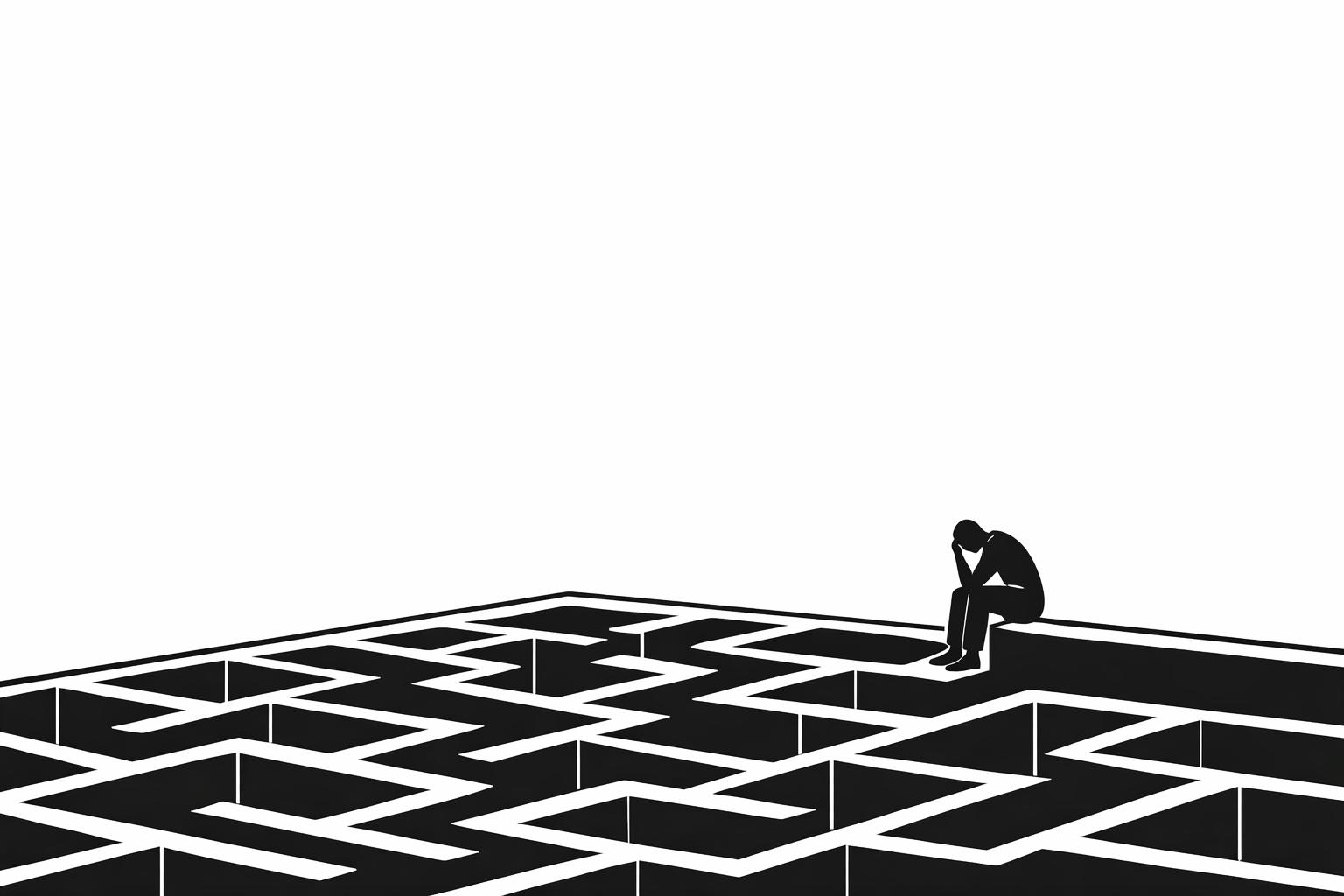
The problem isn’t AI - it’s how we use it. Our constant craving for quick entertainment, fueled by endless scrolling and instant dopamine hits, is reshaping how we think and work. From shrinking attention spans (down to 47 seconds on average) to rising ADHD diagnoses, the effects of this "cheap novelty addiction" are everywhere.
Here’s the key takeaway: AI amplifies existing habits. If you’re already hooked on shallow, algorithm-driven content, AI will keep feeding that cycle. But if used intentionally, it can help you focus and save time.
The Real Issue:
Our brains are wired for novelty. Dopamine drives us to seek rewards, and social media, notifications, and streaming platforms exploit this.
Productivity suffers. Multitasking and distractions create "attention residue", making deep work harder.
Mental health takes a hit. Anxiety, poor sleep, and memory issues are common side effects of digital overload.
How to Break Free:
Set digital boundaries. Turn off non-essential notifications and schedule phone-free time.
Be mindful. Pause before reaching for your phone and identify emotional triggers.
Prioritize focus. Dedicate time to deep, uninterrupted work.
Tools like Pausa can help by encouraging reflection and tracking habits, but the solution starts with reevaluating how we interact with technology. Your attention is your most valuable resource - protect it.
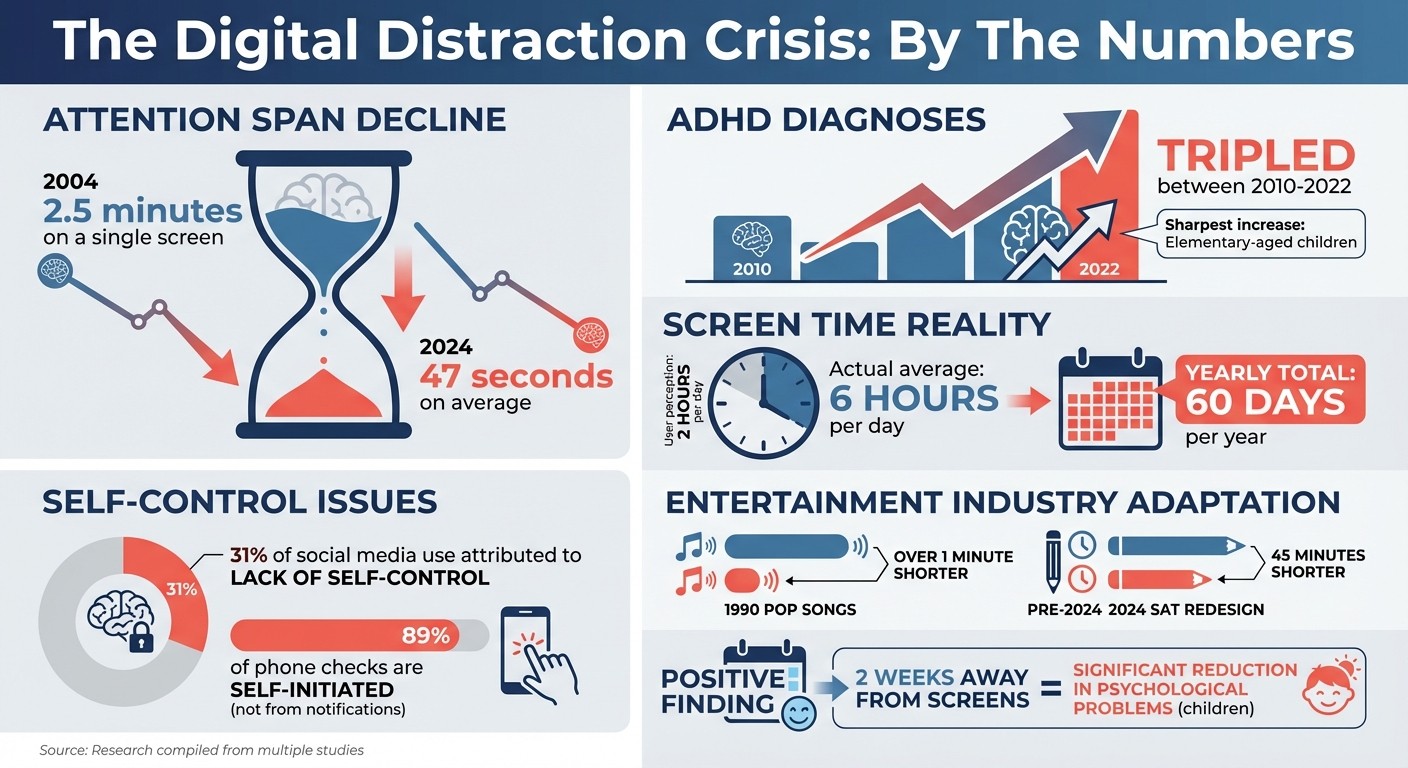
The Impact of Digital Distraction: Key Statistics on Attention, Screen Time, and Mental Health
How Cheap Novelty Hijacks Our Attention
The Science Behind Novelty Addiction
Your brain isn’t designed to handle the constant flood of digital distractions. Dopamine, often misunderstood as a "pleasure chemical", actually drives us to seek rewards. Every time you unlock your phone or refresh a social media feed, your brain releases dopamine - not because you’re enjoying what you see, but because it’s pushing you to find something new [9][11].
Digital platforms exploit this with variable reward systems, similar to how slot machines work [10][11]. The unpredictability of what you’ll find with each swipe or refresh keeps you hooked. Philosopher Jelle Bruineberg puts it this way:
Digital technologies provide us with the means to achieve this reward with hardly any effort. We only need to move a couple of fingers around on our phone [6].
This constant seeking can desensitize your brain to dopamine over time. You’ll find yourself scrolling longer and longer, chasing a satisfaction that never fully arrives. Addiction expert Dr. Anna Lembke describes this cycle as:
We spiral into a joy-seeking abyss [8].
In the end, this biochemical loop creates habits of endless scrolling and compulsive checking, leaving you stuck in a cycle of distraction.
Common Examples of Novelty Overload
Once you know what to look for, the signs of novelty overload are everywhere. Take social media, for example. What starts as a quick check can easily turn into hours of scrolling. Streaming platforms do the same, pulling you into marathon viewing sessions. Even constant notifications play a role, tricking your brain’s salience network into treating minor alerts as if they’re urgent [9].
This isn’t just a problem during downtime - it creeps into work life too. Multitasking, like juggling emails, messaging apps, and project work, creates something called "attention residue." This is when leftover thoughts from one task interfere with your ability to focus on the next [9]. For younger generations, media multitasking has been linked to memory issues, impulsiveness, and even changes in brain function [9].
The entertainment industry has also adapted to our dwindling attention spans. For instance, the average length of top-performing pop songs has dropped by over a minute between 1990 and 2020. Even standardized tests like the SAT have been shortened; in 2024, it was redesigned to be 45 minutes shorter, with reading passages reduced to just a few sentences [3].
The Cost of Distraction on Productivity and Mental Health
The constant chase for stimulation comes with real consequences. Dr. Jyoti Kapoor, a psychiatrist and founder of Manasthali, describes the mental impact with the term "popcorn brain":
Thoughts get fragmented, rendering the individual unable to pay attention to one subject, and thoughts jump from one thing to another like popcorn kernels popping in a pan [7].
The physical and mental toll is hard to ignore. Overindulging in digital distractions can lead to brain fog, poor sleep, muscle stiffness, and memory issues [8]. Emotionally, it can stir up anxiety, aggression, low self-esteem, and FOMO (fear of missing out) [8][5]. Your ability to engage in deep, focused work - where your best ideas and results happen - suffers as your brain becomes wired for constant task-switching [7].
The numbers tell a troubling story. Around 31% of social media use is attributed to self-control issues [4]. ADHD diagnoses have tripled between 2010 and 2022, with the sharpest increase among elementary-aged kids [3]. There’s hope, though: research shows that just two weeks away from screens can significantly reduce psychological problems in children [12].
Understanding these costs is the first step toward breaking free from distraction and reclaiming your focus.
Why AI Gets Blamed for the Wrong Reasons
AI as a Neutral Tool
AI isn’t ruining your focus - you are. Historically, every new innovation has faced criticism for supposedly damaging our minds. Believe it or not, ancient writers once argued that books were a distraction. Today, AI takes the heat for similar reasons. But the real issue isn’t AI itself - it’s our tendency to chase instant, surface-level rewards.
Here’s the reality: AI is just a tool, and its impact depends entirely on how you use it. Even something as simple as the book index faced skepticism when it first appeared. AI works the same way - it magnifies your habits. If you’re easily distracted, AI-powered feeds will keep pulling you in. But if you approach it with intention, AI can actually save you time and boost your productivity.
Daniel T. Willingham, a psychology professor at the University of Virginia, explains it clearly:
It's not that students can't pay attention, but rather that they more readily choose not to [13].
The problem isn’t that AI has somehow rewired your brain. The issue is that constant digital rewards make everything else seem dull by comparison. When you feel bored, it’s often because you’re subconsciously measuring your current activity against the instant gratification AI-driven platforms provide [13]. While AI itself is neutral, it becomes risky when we let it replace our ability to think critically.
The Risks of Over-Reliance on AI
Although AI doesn’t carry any inherent bias or intent, the real danger lies in leaning on it too much. When you start relying on AI for tasks like drafting emails, picking meals, or solving simple problems, you’re essentially offloading mental effort [14]. Christopher Dede, a senior research fellow at Harvard Graduate School of Education, warns:
the owl sits on your shoulder and not the other way around [15].
In other words, AI should assist you - not take over your thinking.
Overdependence on AI can weaken essential skills like memory, creativity, and problem-solving. Think about how GPS has made it harder for people to memorize routes or understand geography. Similarly, relying too heavily on AI can erode your cognitive abilities [15]. Between 2010 and 2022, ADHD diagnoses tripled, with the sharpest increase among elementary-aged children [3]. While AI isn’t directly responsible for this trend, our habit of outsourcing mental effort to devices has made the problem worse. The technology isn’t the villain here - our behavior is.
Recognizing these risks is the first step toward taking back control of how we interact with AI and our digital habits.
Dopamine Expert: Doing This Once A Day Fixes Your Dopamine! What Alcohol Is Doing To Your Brain!
How to Break Free from Novelty Addiction
Breaking free from novelty addiction starts with reevaluating how you interact with technology. Often, distraction isn’t just about the tech itself - it stems from internal feelings like boredom, anxiety, or loneliness. Recognizing this connection is the first step toward regaining control. Once you understand the "why" behind your distractions, you can take practical steps to reshape your habits and reclaim your focus.
Set Digital Boundaries
Creating boundaries is crucial for minimizing distractions. Start by turning off non-essential notifications, especially those red badge alerts designed to grab your attention and trigger stress. Keep your phone out of sight during work or use app limiters to curb usage. Studies show that even having a phone nearby - even if it’s off - can hurt your ability to focus, remember, and solve problems effectively [17].
Introduce intentional "no-screen time" blocks into your day. This doesn’t mean giving up screens entirely but rather setting deliberate limits. For instance, removing social media apps from your work devices can make it harder to indulge in impulsive scrolling. By increasing the effort needed to access these apps, you’re less likely to succumb to temptation [16]. With these boundaries in place, you can begin using technology more purposefully.
Practice Mindful Technology Use
Mindful technology use is all about being intentional with how and when you engage with your devices [17]. The next time you feel the urge to check your phone, pause and reflect on what’s driving that impulse. Are you anxious about a looming deadline? Maybe you’re just bored. Identifying the emotion behind the behavior can disrupt the automatic habit loop.
A helpful strategy is the 10-Minute Rule: when you feel the pull to check your phone or visit a distracting site, tell yourself you’ll wait 10 minutes before doing so [16]. Often, this delay is enough for the urge to pass. This technique, known as "urge surfing", can help reduce impulsive behavior over time.
Pay attention to triggers that lead to excessive phone use. Research suggests that lack of self-control accounts for 31% of social media use [4]. By tracking these triggers, you can better understand your patterns and take steps to minimize distractions. Mindful use lays the foundation for deeper focus and more meaningful work.
Prioritize Deep Work and Reflection
If you want to rebuild your focus, set aside specific blocks of time for deep, uninterrupted work. Treat these periods like unbreakable appointments. Back in 2004, people spent about two and a half minutes focusing on a single screen. Today, that number has plummeted to just 47 seconds [3]. Reclaiming your ability to concentrate requires intentional practice.
Engage in activities that demand sustained attention and effort. This could mean reading long-form articles, tackling challenging projects, or dedicating time to thoughtful reflection. To make this easier, structure your environment to support focus. Remove distractions from your workspace, and consider using precommitment strategies - like financial penalties for missed deadlines - to hold yourself accountable [16].
As Nir Eyal, author of Indistractable, points out:
Distraction is a symptom of a problem - not the problem itself. Those deeper and systemic reasons - such as an inability to cope with fear, anxiety or stress - deserve our concern [16].
How Pausa Helps You Build Better Habits
Pausa combines practical strategies with integrated tools to help you break free from novelty addiction and develop mindful tech habits.
Overcoming the grip of novelty addiction takes more than sheer willpower - it requires tools that create a moment of pause before you act on impulse [20][21]. Pausa’s AI-powered journaling is built to do just that, helping you uncover emotional triggers and foster lasting habits through reflection and accountability.
Capture Thoughts in 20 Seconds
Pausa’s quick capture feature - available via voice or text - acts as a mental speed bump. When you feel the urge to reach for your phone, you can record your thoughts or emotions in just 20 seconds. This small but impactful step disrupts the automatic cycle of discomfort leading to digital distraction. Psychotherapist Nancy Colier puts it this way:
Awareness is our refuge. Rather than immediately indulging, we can pause and say, 'What would I have to feel right now if I didn’t use my phone?' [21]
Pausa helps you create that critical pause, reminding you that 89% of phone checks are self-initiated, not triggered by notifications [22].
The speed of this feature matters. It reduces what researchers call "switch cost" - the mental energy lost when you constantly shift focus [2]. Instead of letting distracting thoughts accumulate, you can quickly offload them, clearing your mind for more meaningful work. This "mind dump" approach helps close the "open loops" that otherwise linger in your mind, freeing up mental bandwidth for deeper focus [23]. By interrupting impulsive behavior, this quick capture feature also lays the foundation for more thoughtful daily reflections.
Daily Recaps and Actionable Insights
Many people underestimate their digital habits. While the average daily screen time is around 6 hours, most users think they spend only 2 hours on their devices [19]. Pausa’s daily recaps bridge this awareness gap by highlighting patterns in your behavior. You won’t just see how much time you spent on your phone - you’ll also uncover the emotional triggers behind those moments.
For example, you might notice that you check social media when you’re anxious about a deadline or scroll aimlessly when feeling lonely. Instead of vague goals like "use my phone less", Pausa helps you pinpoint specific triggers and behaviors. With personalized insights drawn from your own data, Pausa turns self-awareness into actionable steps. When the app suggests to-dos based on your entries, you’re getting personalized recommendations grounded in your actual habits.
Goal Tracking for Long-Term Progress
Novelty addiction thrives on instant gratification, but real change comes from meeting deeper psychological needs - like autonomy, connection, and a sense of accomplishment [19]. Pausa’s goal tracking features are designed to support these needs by giving you control over your time, aligning your actions with larger purposes, and helping you build confidence through steady progress.
Instead of chasing the fleeting dopamine rush from endless new content, you’ll work toward meaningful goals that grow over time. The tracking tools keep you accountable, showing how daily efforts build into significant improvements in focus and clarity. This approach replaces the empty satisfaction of novelty with the lasting fulfillment of progress.
Journaling Prompts to Reclaim Your Focus
Journaling can be a powerful tool to uncover the patterns behind your digital distractions and build the self-awareness needed to shift toward more meaningful work. The prompts below are designed to help you identify what pulls your attention away and guide you toward actionable steps to reclaim your focus.
Identify Distraction Triggers
Start by tracking moments when you feel distracted. Ask yourself questions like: "What emotion am I feeling right now?" or "How does this distraction show up physically?" These moments often stem from underlying discomfort, such as boredom, loneliness, insecurity, fatigue, or anxiety [16].
One exercise you can try is categorizing your daily activities. Divide them into two groups: those that nourish you (like deep work, reading, or exercising) and those that offer quick, fleeting novelty (like endless social media scrolling) [5]. This simple inventory can reveal where your time is going versus where you’d like it to go. You might also want to track how often you instinctively reach for your phone - this can help you spot unconscious triggers [18].
Once you’ve identified these triggers, use the insights to evaluate which digital tools align with your goals and which ones derail your focus.
Reflect on Technology Use
Take a closer look at the apps and tools you use daily. Ask yourself: "What role does this app play in my life?" and "Does this tool help me achieve my long-term goals, or does it distract me from them?" After cutting back on phone use, reflect on how it makes you feel and what new observations come to light [24].
Review your journal entries for warning signs, such as restlessness when you’re offline, losing track of time while using certain apps, or feeling like real life is less engaging compared to online activities [25]. It’s worth noting that many adults spend over four hours a day on their phones, which adds up to about 60 days per year [24]. Calculating your own screen time can be a wake-up call, helping you see the real cost of digital habits.
Once you’ve reflected on your tech use, you can shift your attention to creating clear, purposeful digital habits.
Set Intentions for Digital Habits
Think about how you want to feel at the end of the day - relaxed, accomplished, and fulfilled [2]. Use journaling to explore what boundaries you can set to reduce distractions. Ask yourself: "What’s one habit I can change today to improve my focus?"
Reframe your mindset around tasks by shifting from "I have to" to "I get to." For instance, instead of writing, "I have to finish this project," try writing, "I get to share my ideas with others today" [16]. This small change can make a big difference in how you approach your day.
Consider setting specific intentions, like observing a weekly "digital Sabbath" where you unplug from screens or establishing "conversation office hours" to reduce constant texting [18]. As Cal Newport wisely points out:
Reducing the easy distraction without also filling the void can make life unpleasantly stale [18].
To avoid that, plan activities that bring value and joy - like playing board games, joining a book club, or picking up a new skill - to replace the time you’d otherwise spend scrolling.
Building a Digital Detox Routine
Breaking free from the grip of novelty addiction isn’t just about willpower or vague resolutions. As Cal Newport wisely highlights:
Willpower, tips, and vague resolutions are not sufficient by themselves to tame the ability of new technologies to invade your cognitive landscape [18].
The real solution lies in crafting a structured routine that makes distractions harder to reach while encouraging meaningful, fulfilling activities. By reducing digital triggers and promoting intentional tech habits, you can create an environment that supports focus and deeper engagement with your work and life.
Weekly Challenges to Reduce Screen Time
Start small with weekly challenges designed to cut back on unnecessary screen time. For instance, try no-scroll days, where you limit mindless app usage to just 30 minutes a day [27]. Another effective habit is implementing phone-free evenings - put your devices away at least 30 minutes before bedtime or during dinner [26][27].
You might also consider a digital Sabbath - a weekly break from screens to reset your dopamine levels [18]. In fact, research from the University of Pennsylvania discovered that students who restricted their Facebook, Instagram, and Snapchat usage to 10 minutes per platform daily (a total of 30 minutes) for three weeks experienced noticeable reductions in loneliness and depression compared to those with unlimited access [27]. Another simple yet impactful change is consolidating smartphone notifications into just three daily batches, rather than receiving them in real time. Studies show this adjustment can significantly reduce stress and increase happiness [27].
But here’s the catch: cutting back on screen time isn’t enough. It’s essential to fill the void with activities that bring genuine satisfaction. As Jia Tolentino aptly puts it:
Reducing the easy distraction without also filling the void can make life unpleasantly stale [18].
Replace scrolling with activities that offer slower, more meaningful rewards, like reading, pursuing hobbies, or participating in group events [26][5].
Use Pausa for Accountability
Staying on track with a digital detox becomes much easier when you have tools to hold yourself accountable - without falling back into the trap of addictive platforms. That’s where Pausa comes in. With its email and WhatsApp reflections, Pausa helps you monitor your progress without requiring you to engage with distracting apps.
You can log quick reflections - either through text or voice - on how your detox is going. Each day, Pausa sends you a recap, allowing you to identify patterns, celebrate small wins, and stay motivated. Unlike traditional journaling apps that often require you to dive back into your phone’s app ecosystem, Pausa keeps things simple and distraction-free.
Track your screen-free hours, note how you feel during phone-free evenings, and use Pausa’s goal-tracking features to measure your progress toward healthier digital habits. It’s a practical way to stay accountable while avoiding the very distractions you’re trying to escape.
Conclusion
The real challenge we face isn’t the technology itself - it’s how we interact with it. As we’ve explored, the decline in our ability to focus isn’t caused by AI, but by our fixation on constant novelty. Philosopher Jelle Bruineberg describes this as a “profound mismatch” between our brain’s natural craving for novelty and the effortless access to stimulation that digital technologies provide [6]. This environment, built to exploit our evolutionary wiring for quick rewards, has led to a significant drop in attention spans [3].
AI tools, in themselves, are neutral. They reflect the patterns we’ve already established. For instance, only 31% of social media use is self-initiated [4], which perpetuates a cycle of instant gratification. Instead of dedicating time to slower, more rewarding activities, we’re stuck chasing quick hits of dopamine [5]. This misplaced blame on AI distracts us from addressing the real issue.
Breaking this cycle requires deliberate effort. Start by setting clear boundaries - remove apps that drain your focus and create phone-free zones to encourage deeper engagement [24][1]. Pre-commitment tools can also help by limiting screen time before temptation strikes [4].
Tools like Pausa offer practical solutions, holding you accountable through 20-second reflection prompts, daily summaries, and goal tracking. By aligning your habits with your values, you can shift from mindless distraction to purposeful action.
The solution isn’t to abandon technology - it’s to redefine how we use it. Your attention is precious, so protect it with intention.
FAQs
How does our craving for constant novelty affect mental health?
Our brains have a natural curiosity for new information, and digital platforms know exactly how to tap into that. With endless streams of updates and notifications, it’s easy for simple habits - like checking your phone or email - to spiral into compulsive behaviors. Over time, this constant stimulation takes a toll, disrupting focus, draining mental energy, and leaving us feeling both overwhelmed and mentally drained.
But it’s not just about focus; chasing endless novelty affects emotional well-being too. Rapid scrolling through quick bursts of content - often negative or anxiety-inducing - can shorten attention spans, amplify stress, and even trigger mood swings. This overstimulation creates a cycle that leaves us restless, disconnected, and, in some cases, battling symptoms of depression. Breaking away from this pattern is crucial to safeguard both our mental clarity and emotional health.
Can AI help improve focus and productivity?
While AI isn't a magic fix for boosting focus and productivity, it can be a useful ally when used wisely. For instance, AI-powered tools can help manage tasks, track time, or even limit distractions by blocking specific websites or silencing notifications during deep work sessions.
That said, the real game-changer lies in tackling the root of the problem - our habits. Reducing dependence on constant digital stimulation and building healthier tech-use patterns are essential steps. AI can play a supporting role, but breaking the pull of endless novelty demands deliberate effort and consistent practice.
How can I escape the cycle of digital distractions?
Breaking away from digital distractions starts with setting boundaries and building intentional habits. Begin by scheduling focused work sessions that last 25–45 minutes. During these sessions, silence notifications, close unnecessary apps, and keep your phone out of sight. To stay mentally on track, pair these sessions with a quick reset ritual - try a 2-minute breathing exercise or jot down your top priority before diving in.
You can also introduce tech-free periods into your routine. For example, designate an hour after dinner or even an entire weekend day without screens. Turning off non-essential notifications and setting specific, timed slots for social media use can help curb the habit of constantly checking your devices. Tools like screen-time trackers or app blockers can provide additional support by helping you monitor and limit your usage.
Lastly, set up a workspace that minimizes distractions. Keep unnecessary screens out of sight and consider using analog tools, like a notebook, to capture ideas. Adding mindfulness practices or taking a moment to reflect on your goals can further reinforce your focus and make it easier to resist the constant lure of digital interruptions.