
We Wanted Creativity. We Got Infinite Sludge.
Dec 9, 2025
AI and algorithm-driven content flood your attention, fragmenting focus and stifling creativity; practical habits can help reclaim mental space.
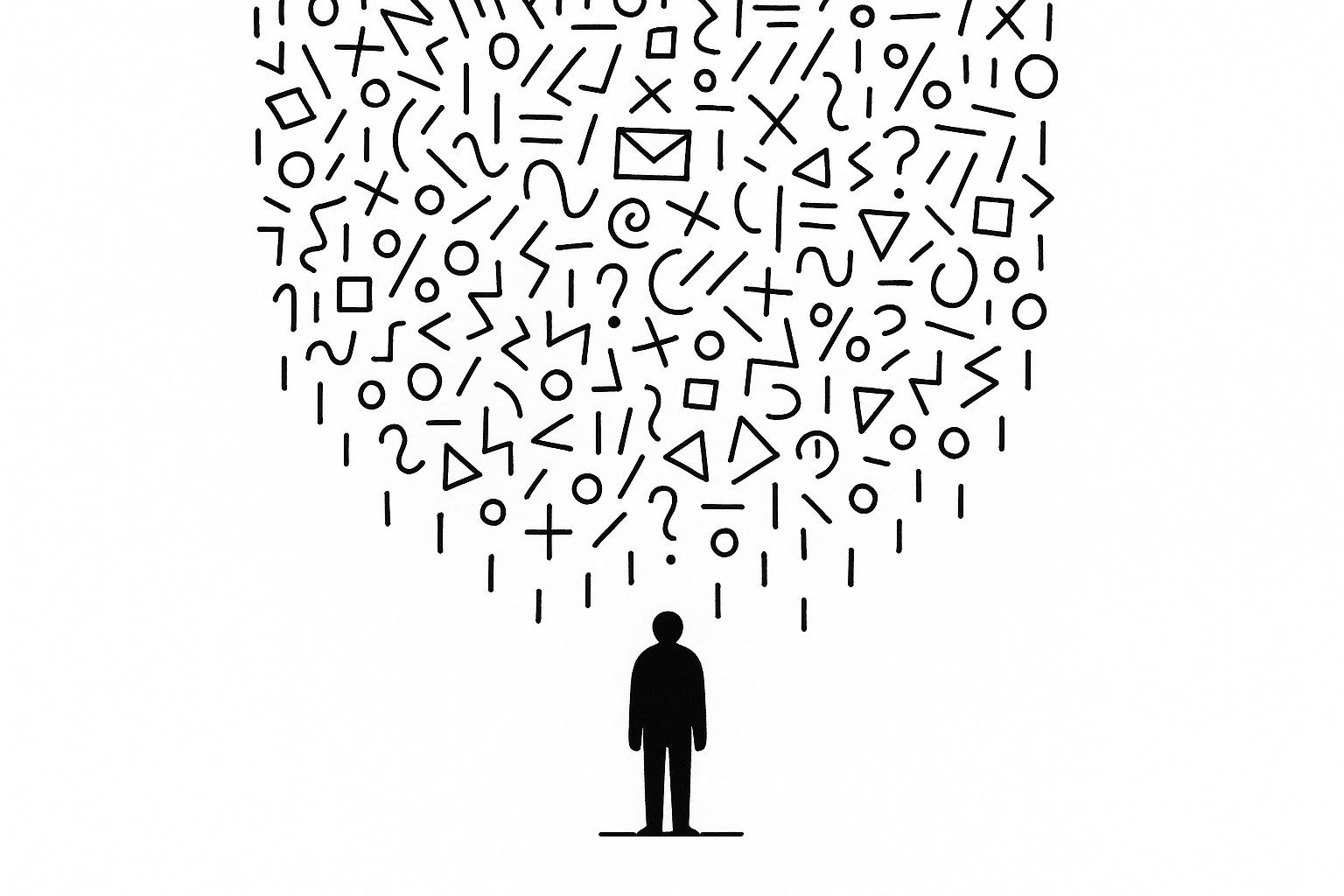
Hook: You're not imagining it - your digital world is noisier than ever.
Value Summary: What was supposed to be a golden age of originality has turned into a flood of repetitive, low-value content. AI tools churn out polished but hollow material, while endless notifications and recommendations leave you mentally drained. This constant overload blocks focus, disrupts deep thinking, and makes meaningful work harder to achieve.
Quick Overview:
Problem: The rise of "infinite sludge" - a never-ending stream of AI-generated and algorithm-driven content.
Impact: Mental exhaustion, fragmented attention, and stalled productivity.
Solution: Limit digital clutter, set boundaries, and practice intentional reflection to regain clarity and focus.
Bridge: Let’s explore how this digital overload affects your mind and how you can take steps to reclaim your mental space.
How Digital Overload is Destroying Your Mental Health And How to Rewire It
What Infinite Sludge Is and How It Blocks Creativity
Infinite sludge refers to the overwhelming digital clutter we face every day. It’s the flood of notifications, AI-generated summaries, and endless "you might also like" recommendations that pile up faster than we can process. While any single piece of content might seem harmless - or even helpful - the sheer volume creates a mental barrier, making it harder to tap into meaningful creativity.
What Infinite Sludge Looks Like in Everyday Life
Picture this: you start your morning with dozens of unread emails, many filled with "quick tips" or productivity hacks you didn’t ask for. Then, you open your notes app, only to find a chaotic mix of half-formed ideas and random thoughts, each demanding attention. On social media, you’re met with an endless scroll of posts, all different yet somehow blending into the same uninspiring noise.
This is infinite sludge in action. It’s the recommendation algorithms that never stop suggesting content, no matter how much you’ve already consumed. It’s the AI writing tools offering countless text variations without clear direction. Even your digital note-taking app can become a graveyard of ideas saved "for later" but rarely revisited. Emails, notifications, scattered notes - it all adds up.
The tricky part? Each piece feels like it might be valuable. That’s why you clicked, saved, or bookmarked it. But the collective weight of all these "potentially useful" inputs creates a mental load so heavy it becomes nearly impossible to focus on creative work. Instead of clarity, you’re left juggling too much at once, unable to fully engage with any one thing.
Why Our Brains Struggle with Digital Overload
All this digital clutter isn’t just annoying - it’s exhausting. Our brains are wired to handle only so much at a time, and constant distractions push those limits. Every notification or interruption pulls your attention away, forcing your mind to reset. Research on attention fragmentation shows that recovering focus after an interruption can take longer than you’d think. Yet, these interruptions happen constantly, leaving little room for the deep, reflective thought that creativity demands.
What’s worse, this cycle feeds on itself. Each distraction triggers a burst of dopamine, encouraging quick, surface-level responses instead of deeper, more thoughtful engagement. Your brain stays in a reactive mode, always scanning for the next thing, instead of settling into the mental state needed for original ideas. The energy you’d normally use for creative thinking gets drained by the endless task of sorting through digital noise.
How Information Overload Stifles Creativity
Creativity thrives on space - mental space to connect unrelated ideas, emotional space to take risks, and time for thoughts to develop. But when you’re constantly consuming new information, there’s no room for consolidation. Your brain never gets the chance to process what you’ve already absorbed, let alone form the unexpected connections that spark creativity.
The constant influx of content also leads to decision fatigue. Every time you choose whether to click, save, or engage with something, you’re using up mental energy. Over time, this leaves you too drained to make the more meaningful choices that creative work requires. Instead of diving deep into ideas, you skim the surface, recognizing patterns but never questioning them. You might even consume content about creativity without actually doing any creative work.
This cycle creates the illusion of productivity - you’re busy, you’re consuming, you’re learning - but very little of it translates into original output. Your creative process becomes fragmented, full of starts but no finishes. Projects stall, ideas don’t mature, and the constant pull of new inputs keeps you from completing meaningful work.
It’s not your fault. This isn’t about personal discipline or willpower - it’s the natural result of an environment designed to grab your attention at every turn. The relentless demands of digital overload fragment your thoughts and make it harder to achieve the clarity needed for deep, sustained creativity.
The Real Costs: Mental Clarity and Productivity
The constant barrage of distractions - what some call "infinite sludge" - takes a serious toll on mental clarity and productivity. It muddles your thought process, affects how you feel, and diminishes the quality of your creative work.
Mental and Emotional Effects
Jumping between emails, notifications, and endless updates doesn’t just eat up your time - it drains your mental energy. This constant multitasking triggers stress, disrupts your sleep, and leaves your mind feeling overworked. When your working memory is overloaded with trivial information, it becomes harder to focus on the kind of deep thinking that drives meaningful work. You might find yourself busy all day, yet feeling like your efforts lack purpose or significance.
This mental exhaustion doesn’t just affect your mood - it chips away at your ability to focus, making it harder to dive into creative or challenging tasks.
How Sludge Disrupts Deep Work
Deep work - those uninterrupted stretches of focused effort where creativity and problem-solving thrive - requires sustained attention. But infinite sludge constantly breaks that focus. Each interruption, no matter how small, wastes time and pulls your mind away from the task at hand. Over time, this fragmented attention weakens both your concentration and the quality of your ideas.
When your brain is constantly switching gears, it becomes harder to make meaningful connections or think creatively. Tasks take longer to complete, and the final results often feel reactive instead of inspired. Instead of driving innovation, your work risks becoming a series of rushed, surface-level efforts.
Adding to the problem, AI-generated content can create the illusion of productivity while further diluting the depth and originality needed for true creative work.
AI's False Promise of Productivity
AI tools are often praised for their ability to speed up workflows by generating drafts, summaries, and outlines in record time. But this high-speed output often comes at the expense of quality. The content AI produces may be abundant, but it frequently lacks the depth, nuance, and insight that come from thoughtful reflection.
Relying too heavily on AI can lead to a formulaic approach to work. Instead of fostering creativity, it can trap you in a cycle of editing and refining drafts that feel hollow. Over time, this shortcut can dull your ability to think deeply and creatively.
Real productivity isn’t about churning out more - it’s about creating work that has impact. It’s those moments of clarity and innovation that redefine how you approach a problem or craft a solution. Unfortunately, the mental clutter caused by infinite sludge stands in the way, making it harder to achieve the focus required for those breakthroughs.
Why Infinite Sludge Happens
We’re swimming in a sea of low-quality content, and it’s no accident. The problem isn’t just about how we consume content - it’s baked into the very systems we use every day. From the algorithms that shape what we see to the tools we use to create, the digital world seems designed to overwhelm us.
Engagement-Driven Algorithms
Social media platforms and content aggregators aren’t built to make us smarter or more creative. They’re built to keep us scrolling. These platforms measure success by how much time we spend on them, how many clicks they generate, and how widely their content gets shared. Whether the content is meaningful or insightful? That’s not part of the equation.
This creates a vicious cycle. Content that stirs up strong emotions - whether it’s outrage, anxiety, or amusement - gets prioritized. The result? Your feed fills up with a stream of repetitive, emotionally charged posts. Think endless hot takes, sensational headlines, and recycled ideas, all competing for your attention with increasingly exaggerated angles.
The problem is, while you’re consuming more and more content, you’re often learning less. The system rewards volume and emotional intensity, not thoughtfulness or depth. And this constant barrage of shallow content takes a real toll. Your brain gets stuck processing noise instead of focusing on the deep, reflective thinking that sparks originality.
And just when you think it couldn’t get worse, here comes another layer of overload: unfiltered AI-generated content.
Unfiltered AI Output
AI writing tools can churn out content at lightning speed - faster than anyone could possibly consume. On the surface, that sounds like a productivity win, but in reality, it adds to the content chaos. These tools flood the digital space with endless material that might look well-written but often lacks the depth or nuance that comes from real human experience.
The sheer volume of AI-generated content makes it even harder to find anything worthwhile. Plus, since much of it shares a similar tone and structure, everything starts to feel like one big blur. It’s like trying to find a single meaningful sentence in a never-ending sea of generic blog posts and summaries.
What’s more, when you use these tools yourself, there’s a temptation to generate multiple drafts or options, picking the one that’s the most polished - not necessarily the most meaningful. In doing so, you might unintentionally add to the very sludge that’s already clogging the digital world.
But it’s not just the quantity of content or the algorithms driving it. The way we work digitally also plays a big role in this mess.
Missing Structure in Digital Workflows
In the past, traditional writing methods naturally imposed limits that forced us to think carefully. But digital tools have removed much of that friction. You can type, delete, rearrange, and even generate new content with almost no effort. While this makes editing easier, it also removes the natural pauses that help us think clearly.
This lack of structure can lead to chaos. Your notes might end up scattered across multiple apps, your ideas spread across random documents, and your to-do list growing endlessly because it’s so easy to keep adding tasks. Unlike paper-based systems, which had built-in constraints - like a limited number of pages in a notebook - digital tools offer unlimited space. And that freedom often turns into clutter.
When disorganized workflows meet the constant flood of information from algorithms and AI tools, the chaos multiplies. You try to save everything - articles, bookmarks, project ideas - but without a clear system to filter and organize it all, you end up buried under a mountain of information. You feel like you’re constantly busy but rarely making progress on what truly matters.
Together, these factors - engagement-driven algorithms, AI’s limitless production, and scattered digital workflows - create the perfect storm. They amplify each other, leaving you overwhelmed by a flood of content that feels urgent but rarely helps you move forward creatively.
How to Reclaim Your Creativity
Breaking free from the constant flood of digital distractions is possible. It’s not about ditching technology altogether - it’s about using it more thoughtfully. Below are practical strategies to help you cut through the noise, protect your mental bandwidth, and rediscover the creativity that often gets buried under endless content.
Using Pausa for Reflection and Action
Traditional journaling apps can feel like a chore, demanding long entries that drain your energy. Pausa takes a different approach. It’s built for speed and simplicity, allowing you to capture your thoughts in just 20 seconds using text or voice. Whether you’re on the iOS app, sending an email, or recording a WhatsApp message, the goal is to make jotting down ideas effortless.
What sets Pausa apart is how it organizes your thoughts. Over time, it creates daily summaries that reveal patterns and recurring themes. You can review these entries on a daily, weekly, monthly, or even yearly basis. Plus, Pausa goes a step further by suggesting actionable to-dos based on your entries, turning vague ideas into concrete steps. This matters because creativity isn’t just about having ideas - it’s about acting on them. By reflecting intentionally, you’ll be better equipped to sift through your digital inputs and focus on what truly inspires you.
Filtering Digital Inputs for Better Ideas
Digital clutter can suffocate creativity. The solution isn’t consuming more content - it’s consuming smarter. Start by setting specific times for social media instead of scrolling aimlessly throughout the day. This simple boundary can help you avoid distractions and leave room for your own thoughts to flourish.
Next, prioritize quality over quantity. Instead of skimming through countless articles, newsletters, or videos, stick to a few trusted sources that offer depth and insight. When something resonates, capture it in Pausa along with your personal reaction. This turns passive consumption into active learning.
Don’t forget to step away from screens altogether. Replace some of your digital intake with real-world sensory experiences. For instance, take a walk without headphones - listen to the sounds around you, feel the air, and notice how light interacts with your surroundings. Research published in Frontiers in Psychology found that just 20 minutes in nature can lower cortisol levels, reducing stress and clearing your mind for fresh ideas [2].
Your focus is precious. Every time your device interrupts you, it can take up to 20 minutes to fully regain your concentration [4]. That’s valuable time and creative momentum slipping away.
Setting Digital Boundaries
To protect your creativity, carve out spaces where digital distractions don’t exist. Establish tech-free zones in your home, like your bedroom or dining area, and shield the start and end of your day from screens. Instead of reaching for your phone first thing in the morning, try breathwork, a quick journaling session with Pausa, or some light stretching [2]. In the evening, create a calming ritual - whether it’s meditation, gentle yoga, or a moment to reflect - to ease away from constant connectivity.
Take control of your notifications. Turn off non-essential alerts and consider temporarily deleting apps that tend to pull you in [4]. Use Pausa to track how these changes impact your sleep, focus, and stress levels. Even a short break from digital distractions has been shown to improve sleep, reduce stress, and boost overall satisfaction [3].
Building a Daily Reflection Habit
Creativity thrives on reflection, not constant reaction. When you’re always responding to notifications, it’s hard to step back and connect ideas. Taking a few minutes each evening to jot down what stood out during your day - whether it’s an insight, a frustration, or a recurring thought - can be incredibly valuable. Over time, these reflections can reveal patterns, like when you’re most creative or which tasks drain your energy, helping you structure your day more effectively.
It’s also important to let your mind wander. Constant digital engagement disrupts your brain’s default mode network, which plays a key role in forming new ideas during rest [2]. Journaling regularly gives your brain the space it needs to make connections you might otherwise miss.
Consider scheduling 30 minutes of "blank time" each week - no music, no podcasts, no multitasking. It might feel strange at first, but studies show that people doing mundane tasks generate 41% more creative solutions than those who are constantly entertained [1]. This unstructured time can be a goldmine for fresh ideas.
Pausa can guide your reflections with prompts like, “Which digital habits are helping my creativity, and which are just distractions?” These questions help cut through the noise and refocus your priorities.
Reclaiming your creativity isn’t about consuming less - it’s about creating more. With daily reflection and intentional habits, you can shift from passive scrolling to purposeful action, making space for the ideas that truly matter.
Conclusion
We hoped digital tools and AI would spark our creativity, but instead, we’re drowning in an endless flood of recycled content. This constant barrage leaves us mentally drained, creatively stuck, and struggling to find focus.
As mentioned earlier, digital overload chips away at our ability to think deeply. It disrupts focus, fuels decision fatigue, heightens anxiety, and even interferes with sleep [5][6]. When your brain is always reacting to notifications and processing a nonstop stream of content, there’s little room left for the kind of deep thinking that leads to original ideas.
But there’s a way to reclaim your creativity. It starts with making deliberate choices. Be selective about your digital intake - schedule specific times for social media instead of letting it dictate your day. Set boundaries by creating screen-free zones and protecting your mornings and evenings from digital distractions. Develop a habit of reflection to give your mind the space it needs to connect ideas and uncover new patterns.
Tools like Pausa can help you organize scattered thoughts into actionable ideas in seconds. Whether you’re capturing insights through text, voice, email, or WhatsApp, the focus shifts from passive scrolling to active reflection. With features like daily, weekly, and monthly recaps, you can identify what’s boosting your energy and what’s draining it. Suggested to-dos then help turn loose ideas into concrete actions.
Creativity isn’t about consuming more - it’s about making room for your own ideas to grow. By adopting mindful habits and using tools that encourage reflection, you can cut through the noise, regain clarity, and uncover the creative spark that’s been buried beneath the chaos. It’s not about doing more, but about being intentional with what you let into your mind and how you use it to create something meaningful.
FAQs
How can I reduce digital clutter to boost my creativity?
Clearing digital clutter isn't just about tidying up your devices - it can also help refresh your mind and boost creativity. Start by organizing your files into well-labeled folders and sticking to a consistent naming system. Take the time to delete files you no longer need, archive older documents, and clean out unused bookmarks and emails.
To keep your digital space organized, make it a habit to dedicate a little time each week for maintenance. This small effort can sharpen your focus, minimize distractions, and turn your digital workspace into a place that sparks inspiration.
How can I manage mental fatigue from constant digital notifications and AI-generated content?
To tackle mental fatigue, begin by paring down your notifications to just the ones that truly matter. Plan regular digital detox breaks to step away from screens and refresh your mind. Embrace mindfulness by choosing quality content over endless scrolling and steer clear of repetitive, low-value material. Lastly, make time for offline activities like working out, diving into a good book, or connecting with loved ones - these can help you regain balance and spark creativity.
How can setting digital boundaries boost focus and productivity?
Setting clear boundaries in your digital life can work wonders in cutting down distractions, allowing you to focus on what’s truly important. When you limit interruptions - like endless notifications or spending too much time glued to screens - you create room for better concentration and more purposeful work.
This approach doesn’t just boost productivity; it also clears mental clutter, making you feel less buried under the constant barrage of digital noise. Simple steps, such as setting aside tech-free hours, silencing non-essential notifications, or using apps to monitor screen time, can go a long way in helping you regain control and sharpen your focus.